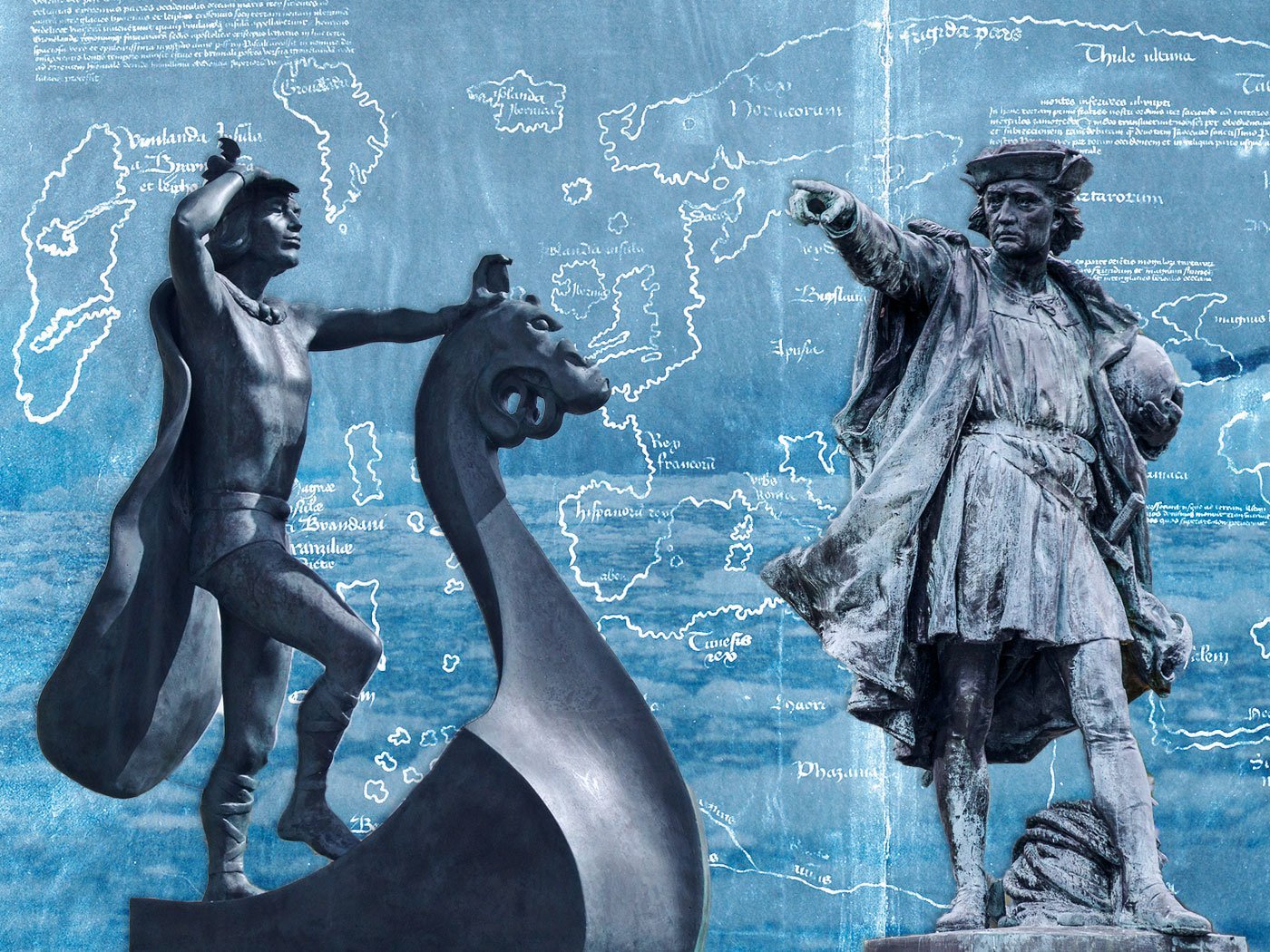
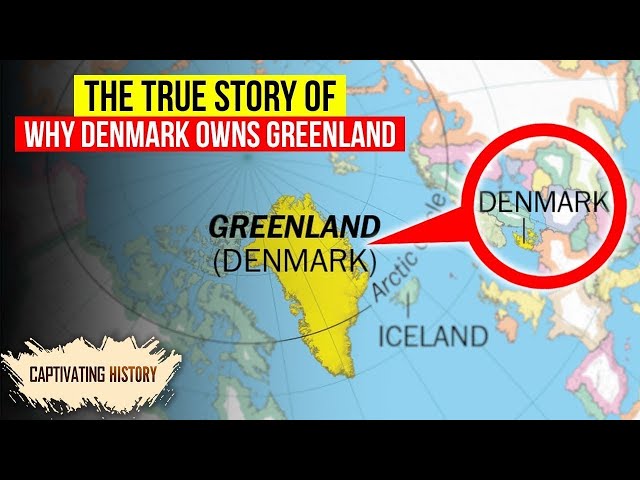
Following the capture of Venezuela’s authoritarian leader, Nicolás Maduro, by the United States in early January, the administration of President Donald Trump has brought back to the forefront a controversial issue that had already surfaced at the start of his second term: Washington’s intention to take control of Greenland, citing national security concerns. This position has provoked strong reactions from Denmark and the Greenlandic authorities, who have unequivocally reaffirmed the principle of sovereignty.
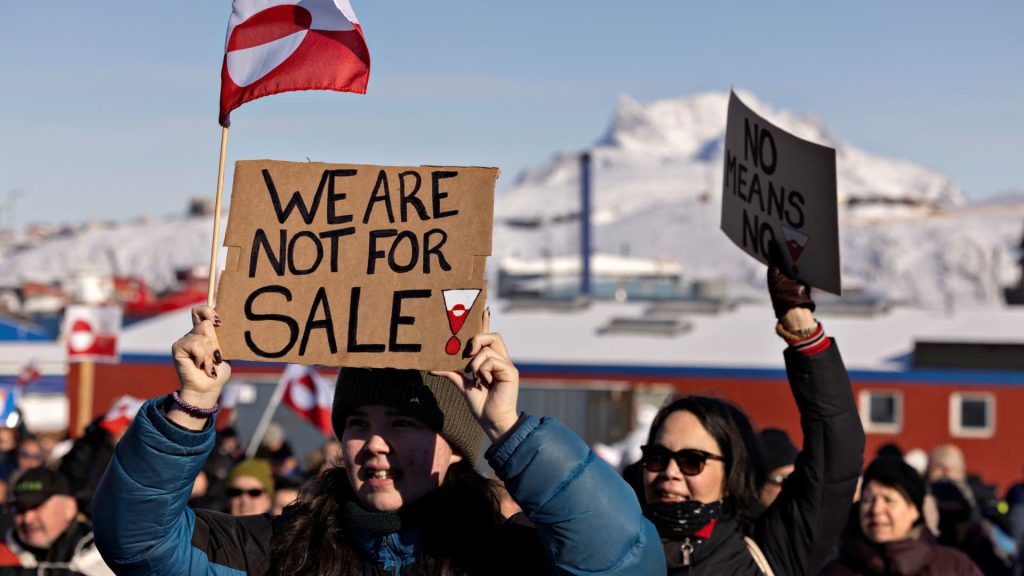
Greenland is not an insignificant peripheral territory, but a space essential to the security and stability of Europe. The island has a special status as an overseas territory associated with the European Union, and its population is part of the Kingdom of Denmark, benefiting implicitly from European citizenship and the right to free movement. Greenland’s importance is multiple: its strategic position in the Arctic makes it a key point from a military perspective, its natural resources give it economic value, and climate change opens up new maritime routes with major geopolitical impact. Control over Greenland directly means influence over a sensitive area of European security policy.
In this context, Europe faces a dilemma: how to respond to pressure from the United States and the risk, even theoretical, of American intervention. A first option would be to adopt a passive attitude, betting on the fact that American constitutional and institutional mechanisms will limit potential foreign adventures. Although convenient, this approach is dangerous, because it conveys a lack of strategic direction and can encourage unilateral actions. The already existing American military presence in Greenland, at the Pituffik base, would facilitate, at least in theory, a rapid intervention against the democratically elected government in Nuuk and the exploitation of local resources for its own interests.
A second, more courageous option would involve discreet but solid European cooperation with Denmark and the Greenlandic authorities. This could include sending additional European military forces to support existing structures, complemented by air and naval capabilities. Such an approach would have both symbolic value and practical importance at a time when the Arctic region is becoming increasingly contested.
Several major European states already share a common assessment of Greenland’s importance. French President Emmanuel Macron visited Nuuk in the summer of 2025 and reaffirmed strong support for the island’s territorial integrity. Finland, through President Alexander Stubb, adopted a similar position, and Germany, initially reserved, later joined a joint European declaration in support of Denmark.
However, political declarations and consensus on strategic importance are not enough. Without real and well-coordinated military cooperation, a security strategy remains incomplete. Even if Donald Trump’s statement that Denmark cannot ensure Greenland’s security alone is provocative, it contains a kernel of truth: effective protection of the island requires a joint European effort. The European Union already has the right tools, such as a rapid deployment capability, which could be used not as a hostile gesture, but as a demonstration of unity and strategic maturity.
Any European strategy must be developed in close cooperation with the government in Nuuk. As the Finnish President has emphasized, decisions on the future of Greenland belong exclusively to Greenland and Denmark. Even if the United States could ultimately ignore an increased European military presence, such a step would significantly increase the political and military costs for Washington and could activate internal control mechanisms in the United States, reducing the likelihood of a radical decision.
In addition, a demonstration of cohesion and strength on the part of Europe could pave the way for serious negotiations with the United States. Transatlantic cooperation would not be ruled out, but rather strengthened: the American base in Greenland could be expanded by joint agreements, for the benefit of collective security. There are precedents, given that during the Cold War thousands of American soldiers were stationed on the island under the 1951 defense agreement, which is still in force.
Through coordinated, calm, and determined action, Europe has a chance not only to counter the expansionist impulses of the Trump administration, but also to redefine the transatlantic relationship. More importantly, such an approach would give Greenland the space it needs to decide its own path, free from external pressure.
EDITORIAL
© 2026, DetectivPress. Toate drepturile rezervate.