Mr. Nistor Becia, your professional journey is truly remarkable: from a graduate of Spiru Haret University to a highly regarded clinical psychologist in the United Kingdom and a recipient of the Order of the British Empire (MBE). How did your career begin, and what have been the most significant moments that have shaped it?
My career did not start in a linear or easy way. It actually started in a context of discipline, responsibility and many limitations. In Romania, I did not have the financial opportunity to go directly to university, as I would have liked. For this reason, I chose to wear the military uniform. It was a choice that came with pride, because I served in a system that formed my discipline, resilience and respect for responsibility, but it also came with certain limitations. At that time, through the contract signed with the Ministry of the Interior, I was not allowed to pursue full-time university studies, but only part-time. This meant that the state universities where I would normally have wanted to study were not a realistic option for me. This limitation was, in fact, one of the reasons that made me reflect deeply on my future and, ultimately, give up a military career in Romania to follow a path of development as a clinician in the UK.
My interest in psychology had already existed for a long time. When I was serving as a non-commissioned officer in the Ministry of the Interior, I read almost all the psychology books that I could get my hands on. In parallel, I was learning English, participating in online psychology courses in English when I could and trying to prepare myself for another path. Some colleagues viewed this interest with a certain irony and said that I was a kind of “nerd”, because I always had books with me, whether they were psychology books or English textbooks. Today I look back on that period with great gratitude, because, beyond the jokes at the time, it was actually the beginning of a path that would change my life.
An important moment was the choice of Spiru Haret University, which was a launching pad for me. It offered me the opportunity to study in my free time, in a format compatible with my professional obligations at the time. Later, the diploma obtained was recognized and equivalent in the UK, which allowed me to continue my postgraduate studies for a bachelor’s degree at Middlesex University in London. There, I consolidated my knowledge of psychology, improved my English and became familiar with the terminology and British academic system. Another defining moment was the admission to the Profesional Doctorate Psihology program at the Metanoia Institute in London. The admission was competitive, with a difficult exam, and the experience I had already gained as an assistant psychologist in the UK mattered a lot, especially since I had no clinical experience in Romania. Coming into contact with the academic environment at Metanoia and, in particular, with Prof. Maria Gilbert and Prof. Vanja Orlans, profoundly influenced my professional trajectory. I had the honor of having them as supervisors and learning directly from them. Prof. Maria Gilbert, who unfortunately passed away, was an important figure at Metanoia Institute, with a major contribution to the development of integrative psychotherapy and clinical training. Prof. Vanja Orlans also had an essential role in the development of the psychology, psychotherapy and counseling programs at Metanoia, being recognized for her academic contribution and for training generations of clinicians.
The Doctorate in Psychology was not easy. I worked while studying, and the trips from Wales to London were a considerable effort. While many of my colleagues lived or practiced in London, I chose to build my practice and professional relationships in Wales. It was a strategic and deeply personal choice, because it allowed me to get to know the Welsh health system, understand the needs of local communities and gradually integrate into the society here. Over time, I understood that my life experience, multicultural knowledge and the fact that I came from a different path than many of those who followed a doctoral program in psychology were not a disadvantage, but on the contrary, an advantage. The people I assessed and treated appreciated the fact that I had a broader life experience and that, before becoming a psychologist, I had done something else. The experience in Romania, including the years spent in uniform, was not in vain. It gave me maturity, discipline, the ability to understand people from different backgrounds and a practical perspective on life. If I had to go back in time, I think I would choose the same path, with all its difficulties, because it was this path that shaped me as a person and as a professional.
Life in the UK was not always easy. I had to work very hard, and the truth is that I invested almost everything in my career, in training and in work. The fees for the Profesional Doctorate Psihology were around £10,000 per year, and this money did not come from financial comfort, but mostly from bank loans. Many years after completing my studies, I had to pay back a significant part of my salary to the banks, because otherwise I would not have been able to sustain this path.
Looking back, the money invested in my studies in the UK would probably have been the equivalent of a modest house in Wales. It is therefore understandable why I did not allow myself a proper holiday for such a long period. During my studies I could not afford it financially, and later I could not afford it in time, because I was caught between work, debt repayment, professional development and building a career in an extremely competitive system.
However, looking back, I believe that it was worth the price paid, because today I can reap the fruits of those years of effort, discipline and sacrifice. I have certainly learned that success does not come from comfort. I have also learned that if you only work from 9 to 5, Monday to Friday, you are working for survival; the hours you invest beyond this schedule, with meaning, discipline and vision, are what build success.
Later, my work in NHS Wales, involvement in supporting Ukrainian refugees, appointment as Deputy Lieutenant of West Glamorgan and awarding the MBE were milestones that came after many years of work, sacrifice and adaptation.
Looking back, I believe my story is not just about professional success. It’s about turning limitations into opportunities, about education as a form of freedom, and about the power to keep building even when the road doesn’t start out in ideal conditions.
You have repeatedly stated that the time spent at Spiru Haret University was a launching pad for your academic career. What role did the years of study play in shaping the values and skills that define you today?
For me, Spiru Haret University played an essential role because it offered me a real chance to start an academic career at a time when my options were very limited. I did not choose this university out of convenience, but because it was the only realistic option that allowed me to study in parallel with my professional obligations at that time.
At that time, I was wearing a military uniform and had contractual obligations that did not allow me to attend university courses full-time. I would probably have liked to go to a state university, but this was not possible in my professional and financial context. Spiru Haret offered me a path to education when other doors were closed. From this perspective, it was truly a launching pad.
I think that in Romania there is sometimes a tendency to look at things in very black and white, either through negative generalizations or excessive idealizations. The reality is, in fact, much more nuanced. It will probably take time before people fully understand that, if you really want to learn, you can do it anywhere and you can start at any level. It is not the institution alone that defines the value of a person, but seriousness, discipline and what they build further with the opportunity received.
Also, not everyone ends up being successful through relationships, files or privileged contexts. There are also people who start from the bottom, who work hard, who rebuild themselves step by step and who end up being recognized for what they offer. My experience in the UK has shown me that, in a competitive but fair system, if you really have something to offer, if you work seriously and demonstrate value, doors can open.
In my career, I have met very good doctors from poor countries, including Africa, trained in universities that are perhaps not considered, internationally, more prestigious than some universities in Romania. However, they were truly talented, serious and dedicated people, who ended up saving lives and contributing enormously to the systems in which they worked. This made me understand even more clearly that we cannot judge the value of a professional only by the country or university of origin. We need to look more closely at the human quality, the seriousness, the desire to learn, the ability to adapt and what the person manages to build further.
Unfortunately, I think that in Romania there is sometimes a tendency to generalize, to look at things in extremes, either very negatively or through excessive idealizations. This tendency probably also has roots in the traumatic past of our society, including the traces left by the communist period on the collective mentality. A culture that has lived for a long time in fear, suspicion, comparison and lack of freedom can end up judging quickly, labeling and having a harder time seeing the nuances. That is precisely why I believe we need to learn to look at people and their journeys with more maturity, balance and openness.
That is why I believe we need to learn to look at the positive side, not just the negative. We need more creativity, seriousness, work and determination. If a person really wants to learn, they can start anywhere, at any level, and with enough discipline and perseverance they can reach their true potential. For me, this is the most important message: the beginning matters, but it should not become a sentence. What you do with the chance you receive, how much you work and how sincere you are in your desire to develop can completely change the direction of your life.
I think it is important to say that the value of a training is not only given by the name of an institution, but also by the seriousness with which the student assumes the learning process. I took those years very seriously. I read a lot, I studied in parallel in English, I made efforts to understand psychology beyond the formal curriculum and I viewed each stage as a preparation for the future.
The years of study formed my intellectual discipline, patience and the ability to learn independently. They taught me that education can be a form of freedom, especially for those who do not start from a privileged context. Later, this foundation allowed me to go further in the UK, to equivalize my studies, to follow postgraduate training at Middlesex University and to be admitted to a doctorate at the Metanoia Institute.
For me, Spiru Haret represents not just a diploma, but the concrete beginning of an academic and professional path that, without that opportunity, might not have been possible.
You have been working in the clinical field since 2009 and have coordinated important departments within the British healthcare system. What challenges did you encounter in adapting to the standards and rigors of the UK healthcare system?
Adapting to the British system was one of the most difficult, but also one of the most formative stages of my life. It meant learning not only a language, but also a professional culture, a different way of thinking about psychology, clinical governance, risk, professional responsibility and working in multidisciplinary teams.
At the beginning, I had to consolidate my English to a very high professional level. It is one thing to speak English in everyday life, but it is quite another to be able to write clinical reports, participate in complex formulations, contribute to multidisciplinary meetings and work with very nuanced clinical concepts in a new system.
Middlesex University helped me a lot in this stage, because there I consolidated my psychological terminology and became familiar with British academic standards. In parallel, working as an assistant psychologist in Wales gave me direct contact with real clinical practice. I had to learn quickly, listen, observe and understand how NHS Wales works.
A major challenge was the fact that I came to Romania without any clinical experience. My previous experience was one of discipline, structure and responsibility in the military system, but not a clinical one. I had to transform this discipline into a professional asset and gradually build clinical, academic and relational skills in the new system.
Doctorate in Psycology in London was another major challenge. Working, studying and regularly travelling from Wales to London required a lot of energy and sacrifice. However, I chose to do my internship in Wales, because this is where I lived, worked and where I felt I could build lasting professional relationships. This choice helped me enormously. It allowed me to get to know the local system, understand people’s needs and integrate into the community.
Today, when I look back, I believe that my adaptation to the British system was based on three things: sustained work, respect for standards and the ability to continuously learn. In NHS Wales, this adaptation gradually transformed into a clinical, academic and institutional career, with involvement in service innovation, mental health policy, advocacy and multidisciplinary collaboration.
During the COVID-19 pandemic, you coordinated crisis management for people with autism and disabilities in South Wales. How has this experience influenced your perspective on the role of the psychologist in society?
The COVID-19 pandemic has shown how vulnerable people with autism, intellectual disabilities and complex needs can become when the systems around them are put under pressure. For me, that period was a profound lesson about the role of the psychologist beyond the office.
In crisis situations, the psychologist is not just the person who provides therapy. The psychologist becomes a specialist who helps to understand behavior, reduce risk, support families, support staff, and build more humane and better coordinated responses. In the case of people with autism or intellectual disabilities, many behaviors considered “difficult” are, in fact, forms of communication of anxiety, confusion, pain, change, or lack of predictability.
This experience reinforced my belief that psychology must be present in the community, in services, in public policies, and in crisis interventions. It is not enough to intervene when things have already deteriorated. We need prevention, education, clinical formulation, trauma-informed practices, and systems that understand vulnerability before it becomes a risk.
I think the pandemic has also brought to the surface another reality: professionals working on the front lines need psychological support as well. We cannot expect people to provide care, stability and calm if they themselves are overwhelmed, exhausted or unsupported.
For this reason, my subsequent work in trauma-informed practice, community mental health, refugee support and working with emergency services has been strongly influenced by that period. My work with Ukrainian refugees, including contributing to the assessment of physical and psychological needs and the development of a model of community psychology in the Welcome Centre in Swansea, has continued this understanding of psychology as a community intervention, not just an individual one.
Your work within the British Psychological Society demonstrates a constant commitment to the development of the profession. What do you see as the greatest challenges facing clinical psychology today?
One of the biggest challenges facing clinical psychology today is access. The need for psychological services is growing, but public health systems are often under pressure and waiting lists can be very long. For many people, support comes too late, when difficulties have already become complicated.
Another challenge is the need to maintain a balance between scientific standards and the human reality of suffering. Clinical psychology must remain evidence-based, but at the same time not become rigid, bureaucratic or disconnected from people’s real lives. Diagnosis can be useful, but it should not reduce the person to a label. We need clinical formulations that take into account trauma, context, culture, family, neurodevelopment and the social environment.
I believe that psychology must now respond better to cultural diversity. Communities are increasingly diverse, and psychologists need to understand that language, migration, identity, shame, social status and experiences of discrimination can profoundly influence mental health.
Another important direction is the integration of psychology into public health. The work of a psychologist should not be limited to the office or hospital. It should contribute to prevention, education, public policy, community support and the development of more inclusive services.
For me, involvement in the British Psychological Society and professional recognition in this framework represents not only an honor, but also a responsibility. It is important that clinical psychology remains a living profession, connected to social reality, to the needs of communities and to the profound changes that people and health systems are going through.
By what methods could people diagnosed with autism spectrum disorders improve their communication skills and the path to social integration?
First of all, I think we need to be careful about how we formulate this question. We should not assume that the autistic person simply has to adapt to our world. Social integration must be a two-way process: the autistic person can be supported to develop communication, but the social environment must also become more predictable, informed and inclusive.
For many autistic people, communication improves when anxiety is reduced, when the environment is clearer and when expectations are explicit. Useful interventions can include support in the development of functional communication, language and communication interventions, visual support, social stories, emotional regulation interventions, social skills programs adapted to the person’s age and profile, as well as family and school support.
It is very important to understand the function of behaviors and sensory needs. Sometimes what seems like a lack of social interest is actually fatigue, sensory overload, anxiety or difficulty processing. For this reason, a good approach must be individualized.
In my work, I have always been interested in the area of post-diagnosis support, that is, what happens after a person receives a diagnosis. The diagnosis can explain many things, but it is not enough. The person and the family need guidance, practical strategies, understanding and support for everyday life.
Social integration does not mean forcing the autistic person to appear “non-autistic”. It means helping them to develop their communication, autonomy, confidence and relationships in a way that respects their identity, rhythm and neurodevelopmental profile.
You are involved in international projects and in supervising students in the fields of medicine, clinical psychology and psychiatry. What advice would you give to young people who want an academic and professional career at an international level?
I would tell them, first of all, not to wait for perfect conditions to start. I did not start from ideal conditions. I did not have the money to go directly to university, I had professional obligations that limited my academic options and I was forced to study in my free time. But I started with what I had: books, discipline, curiosity and the desire to move forward.
I would also tell them to learn foreign languages, especially English, not only at a conversational level, but also at an academic and professional level. For me, English was a key. I learned it in parallel with psychology, since the time I was a non-commissioned officer, and later it allowed me to study, work and develop in the UK.
Another piece of advice is to accept that an international path involves adaptation, professional humility and a lot of work. When you arrive in a different system, you have to be willing to relearn, accept feedback, rebuild your status, and demonstrate through actions, not just diplomas.
I would also tell them to seek out mentors, but not to rely entirely on the validation of others. Mentors are important, but self-discipline is essential. In an international career, there will be moments of loneliness, fatigue, and doubt. What keeps you going is the deep reason why you started.
At the same time, I would tell them not to believe that success comes with comfort. If you work just for the schedule, from 9 to 5, Monday to Friday, you are often working for survival. The hours you invest beyond this schedule, in learning, training, research, professional development, and personal building, can become the hours that change your future. I don’t say this to glorify burnout, but to emphasize that excellence requires consistency, discipline, and assumed sacrifices.
Finally, I would tell them not to forget their roots. An international career does not mean giving up your identity, but transforming it into a bridge between cultures, systems and people.
Throughout your career, you have maintained a close connection with the academic environment in Romania. How important is it for you to stay connected to your Romanian professional and cultural roots?
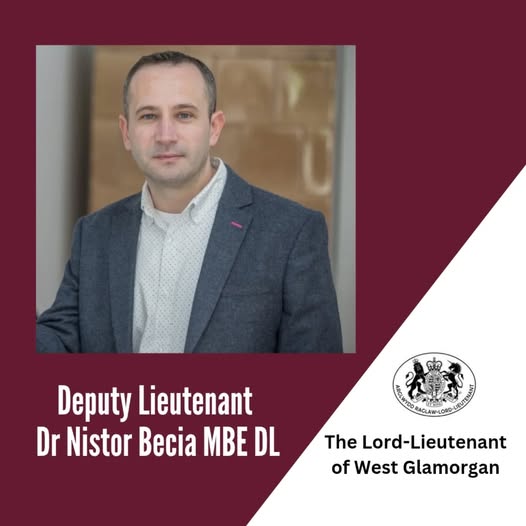
For me, the connection with Romania remains very important. Even though Wales is my home and the place where I built my clinical and public career, my roots are Romanian. I do not see these two identities as being in conflict, but as two dimensions that complement each other.
My personal experience has taught me that belonging does not have to be exclusive. You can be deeply integrated into a new society and, at the same time, maintain respect, affection and responsibility towards the country you left from. For me, Romania remains the place of beginnings, of family, of my mother tongue and of my first academic aspirations.
I have tried to maintain this connection through professional projects, through UK Diaspora for Health, through collaborations with professionals from Romania, through publishing activity and through the role I had as Honorary
Honorary Consul of Romania in Wales. For me, UK Diaspora for Health is not just a professional platform, but an initiative through which I want to contribute to global health and to the development of real bridges between the medical diaspora, institutions and communities. Just as many clinicians and professionals from other countries try to give something back to their countries of origin, I feel a natural responsibility to give something back to Romania.
Romania remains the country where I was formed as a person, and the experience gained in the United Kingdom can be used to support collaboration, knowledge exchange and the development of projects that have a concrete impact.
I believe that the Romanian diaspora has extraordinary potential. Romanians who have succeeded professionally abroad can contribute to knowledge transfer, partnerships, modernization and a more dignified image of Romania in the world. This is one of my deep motivations: to build bridges between Romania and the United Kingdom, especially in the fields of mental health, education and public service.
Who were the personalities you met during your diplomatic career?
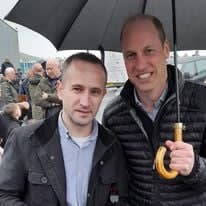
I have had the privilege of meeting remarkable people from different fields: members of the British Royal Family, diplomats, civic leaders, health professionals, representatives of the Romanian community, local leaders in Wales and people involved in British and Romanian public life.
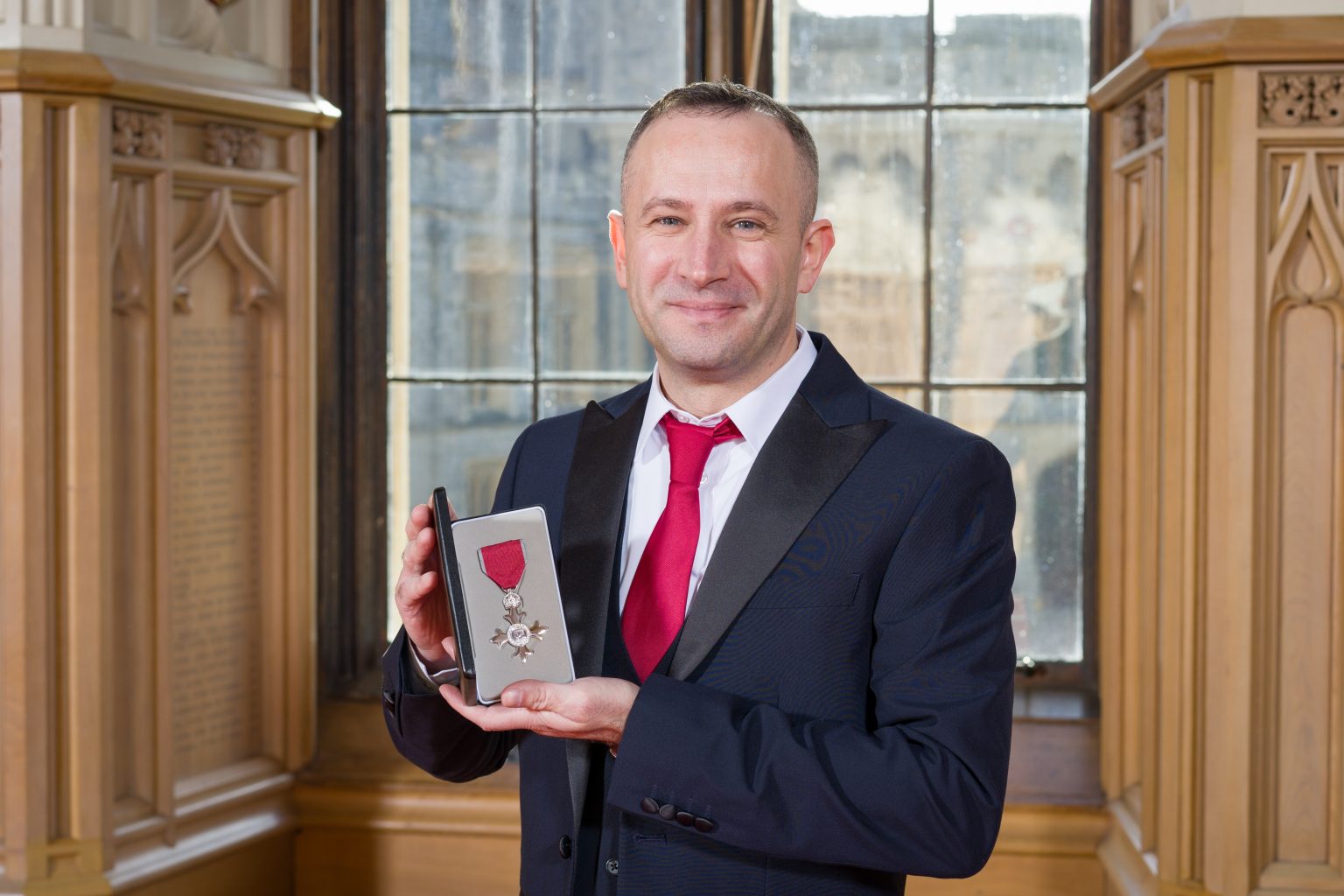
Of course, among the most important meetings remain those with His Majesty King Charles III and other members of the British Royal Family. A very special moment was the meeting with His Royal Highness Prince William, Prince of Wales, in the context of the ceremony at Windsor Castle, when he presented me with the MBE. Prince William recalled a previous conversation on mental health issues, which gave that moment a special personal significance.
Also, in my public work in Wales, the professional relationship with Mrs. Louise Fleet, Lord-Lieutenant of West Glamorgan, was of particular importance. Since 2022, I have had the privilege of developing a close professional relationship with His Majesty’s Lord-Lieutenant of West Glamorgan, Mrs Louise Fleet.
On a diplomatic level, my work as Honorary Consul of Romania in Wales has given me the opportunity to collaborate with representatives of the Romanian Embassy in London, with local authorities and with community leaders. I have had the opportunity to work in contexts where Romania, Wales and the United Kingdom have been brought closer together through culture, health, education and institutional dialogue.
I have also had the pleasure of meeting personalities from the artistic and cultural field. For example, I met Sir Anthony Hopkins in Port Talbot, a place with a special meaning for me, especially since I recently bought my second home there. Sir Anthony Hopkins is one of the great personalities of world cinema and was born in Port Talbot, Wales, which makes this local connection all the more special.
At the ceremony at Windsor Castle on 12 November 2024, I had the opportunity to meet and talk to some of the remarkable individuals who were receiving their royal honours on the same day. These included British singer Rebecca Ferguson, who was announced as an MBE in the King’s Birthday Honours 2024 and formally invested at Windsor Castle in November 2024 for services to the music industry, and Simon Le Bon, the lead singer of Duran Duran, who was awarded an MBE for services to music and charity.
For me, these meetings are not just moments of prestige or fond memories. They are opportunities to understand the diversity of forms of public service, whether in health, the arts, music, charity, diplomacy or community involvement. Each such meeting reminded me that public recognition ultimately comes from hard work, perseverance and a real contribution to the good of others.
The Member of the Order of the British Empire (MBE) is one of the most important awards given by the British Royal Family. What did it mean to you when you received this honor at Windsor Castle?
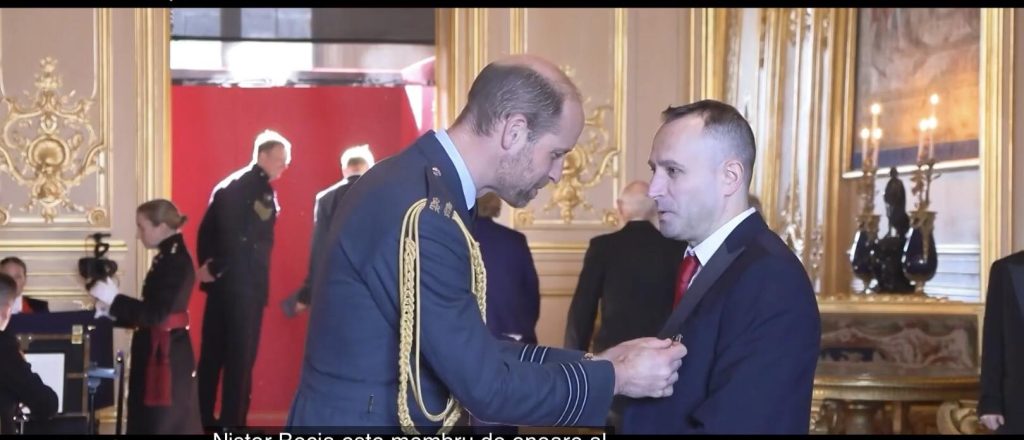
It was one of the most moving and profound moments of my life. For me, the MBE was not just a personal distinction. It was the symbol of a long journey, begun in modest circumstances, through many sacrifices and built in a country that offered me the chance to develop professionally and civically.
The ceremony at Windsor Castle was a moment difficult to describe in words. The atmosphere, the history of the place, meeting the other distinguished people and the fact that I received the medal from His Royal Highness Prince William made the whole experience unforgettable. I felt a sense of wonder, gratitude and responsibility, especially in a place so full of history, dignity and symbolism.
My work with Ukrainian refugees, particularly the initial mental health support I coordinated when they arrived in Wales, is particularly meaningful to me because the work was not only professional but deeply human. It was about people in distress, uprooted families, trauma, loss, uncertainty and the need for psychological support at an extremely difficult time. The support model developed at that time was later recognised as a good practice example and published on the Traumatic Stress Wales platform, confirming the importance of early, coordinated and trauma-sensitive intervention for people arriving in a new country after experiences of war and uprootedness.
The fact that I am one of the few Romanians to have received an award from the British Royal Family gives me hope that this recognition can also be seen as a sign of integration and positive visibility for the Romanian community in the United Kingdom. In recent years, more and more Romanians have become local councillors, have held leadership roles, have become involved in civic and professional life and are recognised for their contribution to British society. This is a good sign and an important step in changing perceptions about Romanians in the diaspora. Unfortunately, the news often focuses mainly on the negative aspects, and Romanians are presented through unfair stereotypes, as if they were only associated with low-skilled work, crime or social problems. I believe that we need more success stories, real examples of integration, work, dignity and positive contribution. Through my story, I hope to help destroy these myths and send the message to other Romanians that it is possible. You can start from the bottom, work, integrate, be respected and contribute to the good of a society that gradually becomes your home.
For me, this distinction also meant a responsibility. I felt that it was not the end of a journey, but the beginning of a new chapter. A chapter in which I must continue to serve the community with dignity, modesty and integrity. It was, at the same time, a recognition of all the people who trusted me: my family, my colleagues, my mentors, the communities I served and the people who supported me in difficult times.
In the public message sent after being awarded the MBE distinction, you spoke about the support of the people who contributed to your journey. Who were the mentors or people who decisively influenced your evolution?
I believe that no professional path is built alone. Behind every achievement there are people who supported you, challenged you, encouraged you or offered you opportunities at the right time.
For me, family played a fundamental role. Even though I started from a modest background, the moral support, work values and desire to move forward mattered enormously. Then, there were the teachers, colleagues and professionals I met in Romania and the UK, each contributing in some way to my formation.
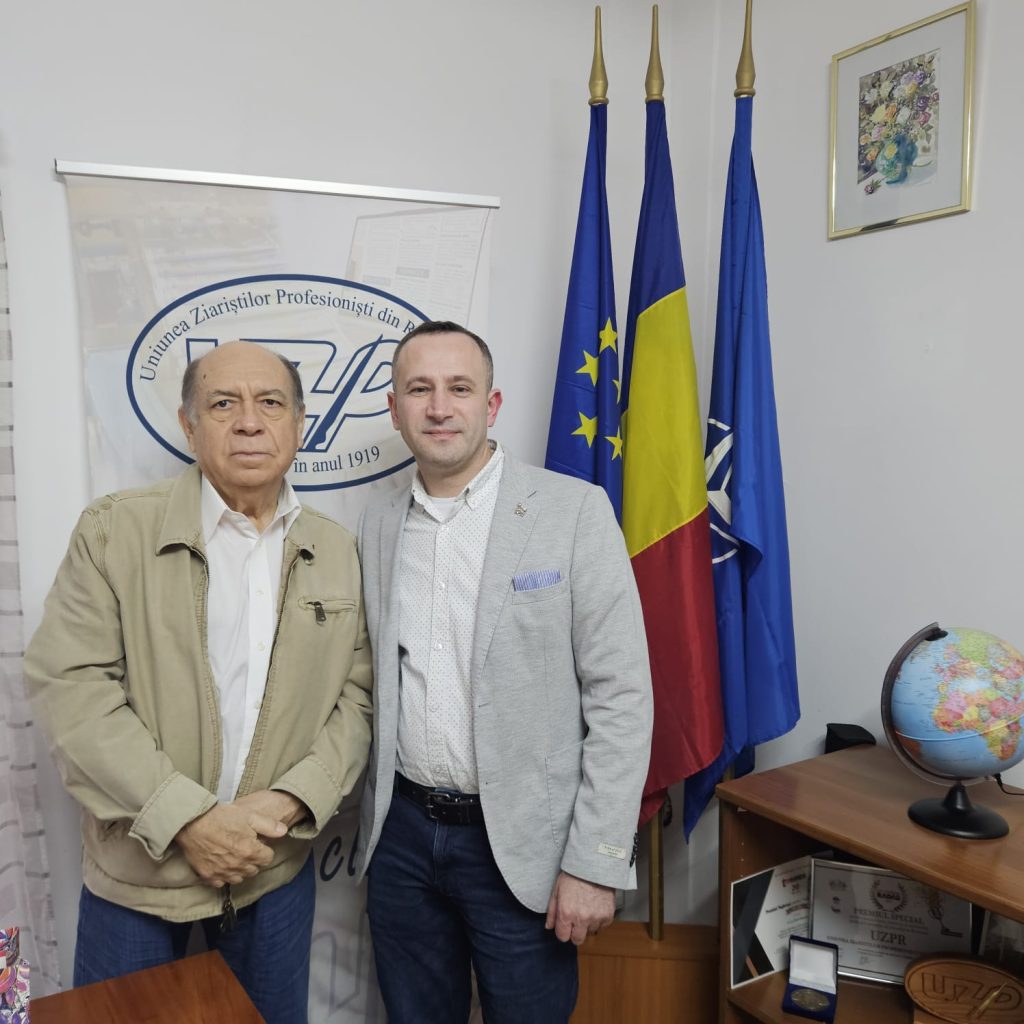
A person who played a very special role in my life was Doru Dinu Glăvan. He was probably one of the few people who truly encouraged me to follow my dream and leave when many others considered me “crazy” to give up my job in Romania. For me, his encouragement mattered enormously, because it came at a time when I needed not only advice, but someone who would see in me the possibility of a greater path than the one I had at the time.
Doru Dinu Glăvan was one of the important personalities of Romanian journalism, journalist, radio personality, founder of Radio Romania Reșița and president of the Union of Professional Journalists in Romania. He was a man who trained and encouraged generations of journalists and people of culture. My relationship with him was a close and important one. He had that rare ability to encourage people to believe in their path, even when that path seemed difficult to understand for others. In my case, he was the man who looked beyond the apparent security of a stable job and encouraged me to follow what I felt was my calling. I will never forget that trust. In many ways, the courage to leave and rebuild my professional life in the UK was also supported by the fact that he believed in me when others doubted.
In the UK, my clinical and academic mentors also played a decisive role. They helped me understand British professional standards, develop my clinical thinking and gain confidence in a system that was, at first, new and difficult.
A special place is occupied by Prof. Maria Gilbert and Prof. Vanja Orlans from the Metanoia Institute. I had the honor of having them as supervisors and learning directly from them. Prof. Maria Gilbert was an important figure in integrative psychotherapy and clinical training at Metanoia, and Prof. Vanja Orlans played an essential role in the development of the professional doctorate in counselling psychology and psychotherapy. Meeting them provided me not only with knowledge, but also with a model of rigor, depth, ethics and clinical responsibility.
Also, several of my supervisors in the National Health Service in Wales had a major influence on my evolution. They believed in me, guided me, challenged me professionally and helped me to understand not only clinical practice, but also the professional culture of the British system. Through them I learned what multidisciplinary work means, clinical governance, responsibility towards patients and the importance of public service.
On a civic level, the relationship with Mrs. Louise Fleet, Lord-Lieutenant of West Glamorgan, was an important one, because she provided me with a model of public service, modesty, dignity and community involvement.
Finally, I think that the people who didn’t believe in me also played a role, indirectly. Those who laughed at me when I was reading psychology and English books when I was a non-commissioned officer probably didn’t imagine that those books represented the beginning of a journey. Today, I look back on those moments with gratitude, because they made me more determined.
Looking to the future, what are the professional projects and goals that you would like to develop in the coming years?
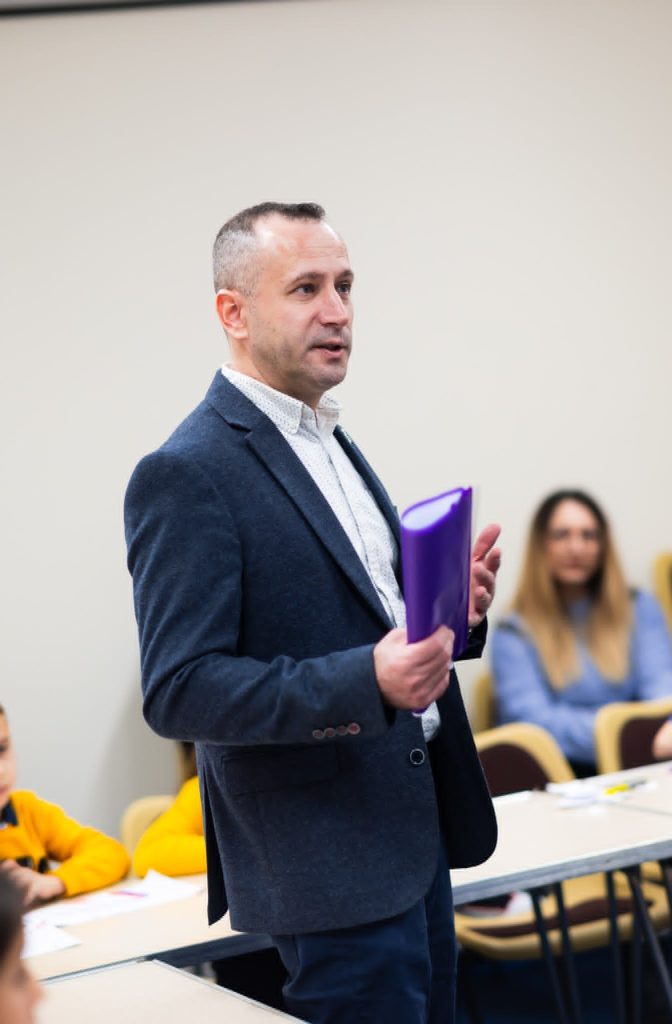
Looking to the future, I want to continue developing projects that bring together clinical psychology, public health, education, prevention and international collaboration.
An important goal is to develop UK Diaspora for Health as a platform for collaboration between professionals, institutions and communities. For me, this initiative represents a way to contribute to global health, but also a concrete form of giving something back to Romania. In many countries, clinicians and professionals from the diaspora use the experience gained in international systems to support their countries of origin. In the same spirit, I hope that the experience gained in the NHS, in mental health, in international collaborations and in trauma-informed practice can be put to use in Romania, through partnerships, professional training, exchange of good practices and projects that connect people and institutions.
There are already several projects that I have spoken about publicly and presented in the professional environment, and my hope is that many of them will come to life this year. Some are still in the construction, dialogue and consolidation of partnerships stage, but the direction is very clear: to transform the experience gained into practical projects, with real impact for people, services and communities.
Another project that I am proud of is my involvement in the area of fire and emergency services in Wales, through my selection as a member of the Independent Advisory Group of the South Wales Fire and Rescue Service. For me, this involvement is important because it brings together my experience in mental health, trauma, diverse communities and frontline services A person who played a very special role in my life was Doru Dinu Glăvan. He was probably one of the few people who truly encouraged me to follow my dream and leave when many others considered me “crazy” to give up my job in Romania. For me, his encouragement mattered enormously, because it came at a time when I needed not only advice, but someone who would see in me the possibility of a greater path than the one I had at the time.
Doru Dinu Glăvan was one of the important personalities of Romanian journalism, journalist, radio personality, founder of Radio Romania Reșița and president of the Union of Professional Journalists in Romania. He was a man who trained and encouraged generations of journalists and people of culture. My relationship with him was a close and important one. He had that rare ability to encourage people to believe in their path, even when that path seemed difficult to understand for others. In my case, he was the man who looked beyond the apparent security of a stable job and encouraged me to follow what I felt was my calling. I will never forget that trust. In many ways, the courage to leave and rebuild my professional life in the UK was also supported by the fact that he believed in me when others doubted.
In the UK, my clinical and academic mentors also played a decisive role. They helped me understand British professional standards, develop my clinical thinking and gain confidence in a system that was, at first, new and difficult.
A special place is occupied by Prof. Maria Gilbert and Prof. Vanja Orlans from the Metanoia Institute. I had the honor of having them as supervisors and learning directly from them. Prof. Maria Gilbert was an important figure in integrative psychotherapy and clinical training at Metanoia, and Prof. Vanja Orlans played an essential role in the development of the professional doctorate in counselling psychology and psychotherapy. Meeting them provided me not only with knowledge, but also with a model of rigor, depth, ethics and clinical responsibility.
Also, several of my supervisors in the National Health Service in Wales had a major influence on my evolution. They believed in me, guided me, challenged me professionally and helped me to understand not only clinical practice, but also the professional culture of the British system. Through them I learned what multidisciplinary work means, clinical governance, responsibility towards patients and the importance of public service.
On a civic level, the relationship with Mrs. Louise Fleet, Lord-Lieutenant of West Glamorgan, was an important one, because she provided me with a model of public service, modesty, dignity and community involvement.
Finally, I think that the people who didn’t believe in me also played a role, indirectly. Those who laughed at me when I was reading psychology and English books when I was a non-commissioned officer probably didn’t imagine that those books represented the beginning of a journey. Today, I look back on those moments with gratitude, because they made me more determined.
Looking to the future, what are the professional projects and goals that you would like to develop in the coming years?
Looking to the future, I want to continue developing projects that bring together clinical psychology, public health, education, prevention and international collaboration.
An important goal is to develop UK Diaspora for Health as a platform for collaboration between professionals, institutions and communities. For me, this initiative represents a way to contribute to global health, but also a concrete form of giving something back to Romania. In many countries, clinicians and professionals from the diaspora use the experience gained in international systems to support their countries of origin. In the same spirit, I hope that the experience gained in the NHS, in mental health, in international collaborations and in trauma-informed practice can be put to use in Romania, through partnerships, professional training, exchange of good practices and projects that connect people and institutions.
There are already several projects that I have spoken about publicly and presented in the professional environment, and my hope is that many of them will come to life this year. Some are still in the construction, dialogue and consolidation of partnerships stage, but the direction is very clear: to transform the experience gained into practical projects, with real impact for people, services and communities.
Another project that I am proud of is my involvement in the area of fire and emergency services in Wales, through my selection as a member of the Independent Advisory Group of the South Wales Fire and Rescue Service. For me, this involvement is important because it brings together my experience in mental health, trauma, diverse communities and frontline services
© 2026, DetectivPress. Toate drepturile rezervate.