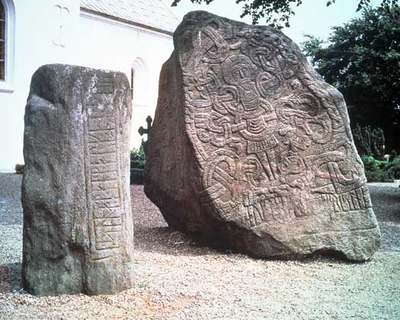
Based on historical evidence discovered by the Danish archaeologist Christian Jurgensen Thomsen (1778-1856), some Danish historians and archaeologists claim the important contribution made by the inhabitants of the territory of Scandinavia in the development of European culture and civilization since antiquity, an influence that was characterized by the favorable geographical positioning of the area, as well as by the means of communication. Archaeologist and writer Henrik Thrane emphasizes that Prehistoric Denmark included geographical parts such as Scania and Schleswig, as well as other areas located further away, would belong to the same historical and cultural segments even today, and with the mass immigration in the 4th century, prehistoric culture on Danish territory had considerable continuity and not only within the limits in which it is defined today.
About the Viking Age (800-1050)
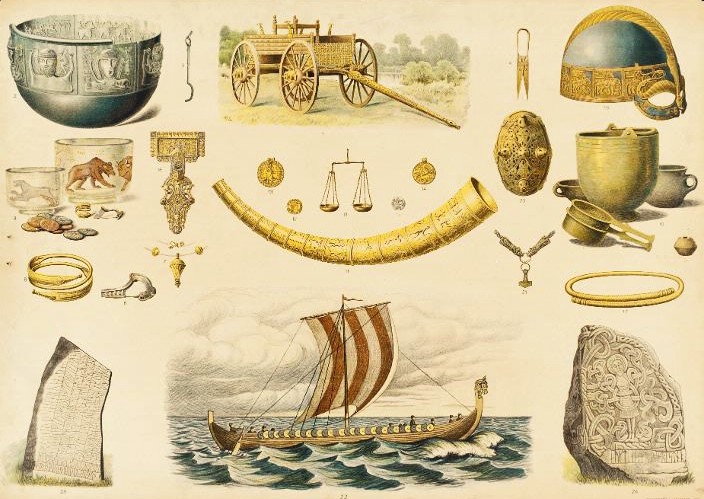
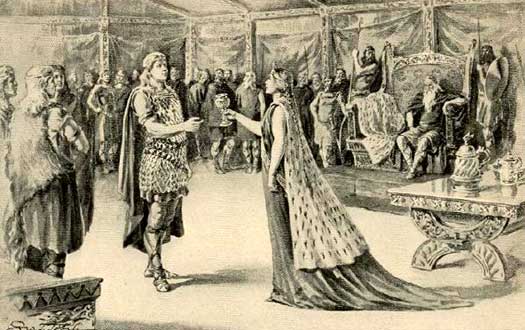
The history of Denmark cannot be complete without mentioning the Viking Age, which was characterized by certain influences that left their mark on history in a significant way. The word Viking in translation means ”sea warrior”, or pirate. After settling in what is now Scandinavia (Denmark, Norway and Sweden), the Vikings began a series of conquests that expanded into western Europe: in 845 they sacked Paris, then stormed England and Normandy in 900, and then conquered England entirely in 1013 and 1016. The transition between Prehistoric and Medieval Denmark took place over a period of 250 years, during which fundamental changes took place, materialized in: the introduction of Christianity, the construction of cities and fortifications, the establishment of a strong monarchy from whose nucleus other European monarchies expanded, the church organization and the influence of religion had a substantial impact on the lives of its followers, and the construction of numerous castles reflected the power and influence of the monarchy over the kingdom. The economy and infrastructure of those times were based in particular on maritime trade, which expanded due to the manufacture of specialized types of ships. Architecture characterized by the construction of bridges, Gothic buildings, the emergence of a commercial currency, books and documents written in Latin, are elements that make up the culture of medieval Denmark. Danish culture quickly Europeanized during the Middle Ages despite the fact that the Viking influence had no connection with this primordial aspect of civilization. (Information source: danmarkshistorien.dk-AARHUS UNIVERSITET 2009).
Denmark at the height of the Middle Ages (1050-1340)
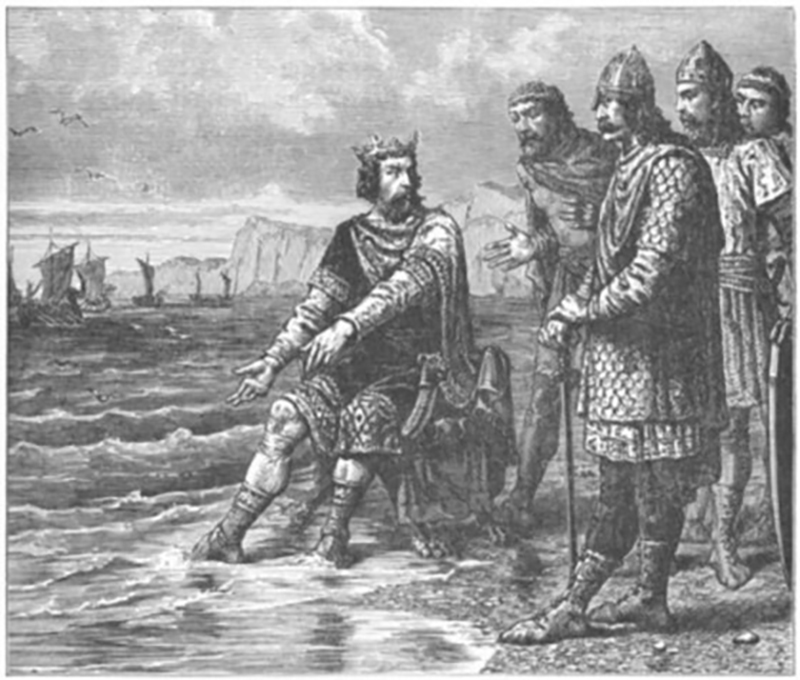
Around the 1050s, the period of external expansion of the Vikings, characterized by raids and forced colonization, ended. During the Viking period, popular beliefs focused on paganism. Odin and Thor were the main gods in which the Scandinavians believed, until the advent of Christianity.
In the year 965, King Harald Bluetooth converted the Kingdom of Denmark to Christianity. The influence of the Catholic Church in Western Europe influenced the process of Christianization of the Danish people. The organization of the Christian Church in Denmark experienced a long transition period, for centuries, until it reached the level of other European countries. Therefore, the process of Christianization of the population of Denmark at that time required a long time to be accepted, assumed and practiced. The Vikings were pagans at origin, and during their domination they strongly impregnated the locals with their religious system.
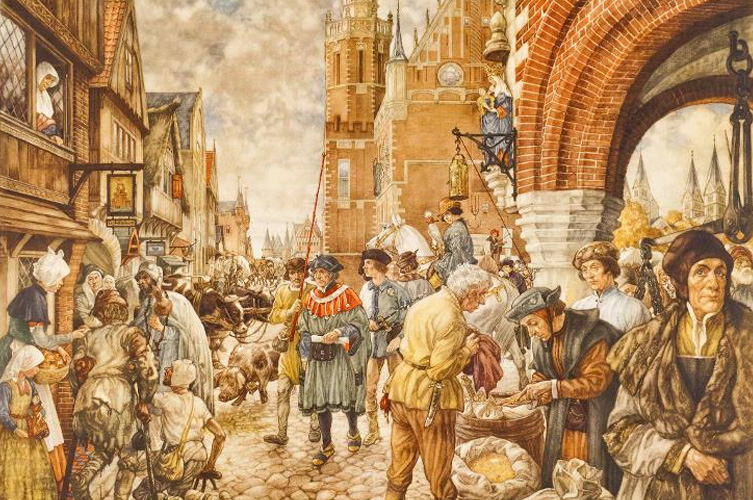
During the High Middle Ages, Denmark developed an intensive agriculture that supported the livelihood of the population. If until the 1050s agriculture focused mainly on raising cattle, after this period, agricultural production focused more on cultivating cereals and vegetables. The reason for this change was the increase in the population and the increase in the tax on agricultural income, the taxes being collected by the church and the monarchy, the main landowners. The agricultural land was worked with a wheeled plow. The development of agriculture in the DANISH KINGDOM resulted in a tripling of the population around the 1300s. At the same time, social institutions also developed, thus marking a strong cultural boom imported from outside the kingdom.
The Kalmar Union june 17 1397- june 6 1523
The leadership of Queen Margaret I, one of the most remarkable rulers in Scandinavian history. Through inheritance rights and political negotiations, she secured authority over Denmark and Norway before extending her influence into Sweden. Her vision was to unite the Nordic kingdoms in order to strengthen their position against external threats and internal instability. At a time when the Hanseatic League dominated much of Baltic commerce and regional rivalries threatened Scandinavian security, a unified northern kingdom appeared both practical and necessary.
In 1397, representatives of the three kingdoms gathered in the Swedish city of Kalmar. There, a formal agreement established a union that brought Denmark, Norway, and Sweden under a common monarch. Although each kingdom retained its own laws, institutions, and aristocracy, foreign policy and dynastic authority were largely coordinated through the shared crown. The arrangement became known as the Kalmar Union and marked the beginning of a new era in Scandinavian history.
A Brief History of Denmark, (Late Middle Ages – 1340-1523)
During the Late Middle Ages, royal power was weakened by internal turmoil, the outbreak of the plague epidemic and conflicts with the nobility who wanted to establish a solid central government, threatened the independence of the kingdom for a period, and then the situation recovered with the reconstruction of a strong monarchy that dominated the Nordic countries. Within that medieval picture shaken by conflicts, the Church remained the only institution in Denmark that enjoyed absolute trust, extending its power, authority and teachings to increasingly wider circles. King Christian II tried to impose some reforms that aimed to modernize society and solidify state power through the bourgeoisie, which was the richest social class, but his attempts failed. In 1523, King Christian lost his power and with it the unity of the Nordic Kingdoms collapsed.
1523-1660 the period of reforms and the status of power.
The period 1523-1660 was strongly marked by numerous political, social and religious conflicts, which started from the religious reforms established on the basis of Martin Luther’s theses. In 1536, the Lutheran system was established in which the king became the representative of an independent church. Thus, Lutheran clergy reached the circle of power enjoying special privileges, and Danish citizens were forced to follow the teachings of Martin Luther. Denmark’s political and economic power was strengthened during this period. The noble class managed to expand its influence, becoming a royal elite. Unfortunately, the powerful status of the Danish Kingdom would decline again in the 7th century due to exhausting and costly wars that depleted the royal treasury and for this reason the fiscal authority burdened the population with taxes, which led to the establishment of a military and fiscal state. Due to the crisis and weakening of the kingdom’s power, Denmark had to cede many territorial parts of the kingdom to Sweden, an inconvenience that led to the outbreak of a civil war that allowed the emergence of autocracy.
About the autocracy period (1660-1784)
Under the leadership of King Frederik III, and later that of Frederik IV, two coups d’état took place, culminating in the installation of autocracy in 1660 and the assumption of power by the crown prince. During the autocratic rule, a centralist and bureaucratic government was established that removed the old form of organization of land-based society, which targeted agricultural production and urban industry. Beginning with the reign of King Christian VII of Denmark, the Danish kingdom experienced a period of significant decline, due to the serious mental problems that the king faced.
Article written by Andreea Arsene based on historical information discovered by archaeologist, writer and Emeritus Professor Henrik Thrane -University of Aarhus
© 2026, DetectivPress. Toate drepturile rezervate.