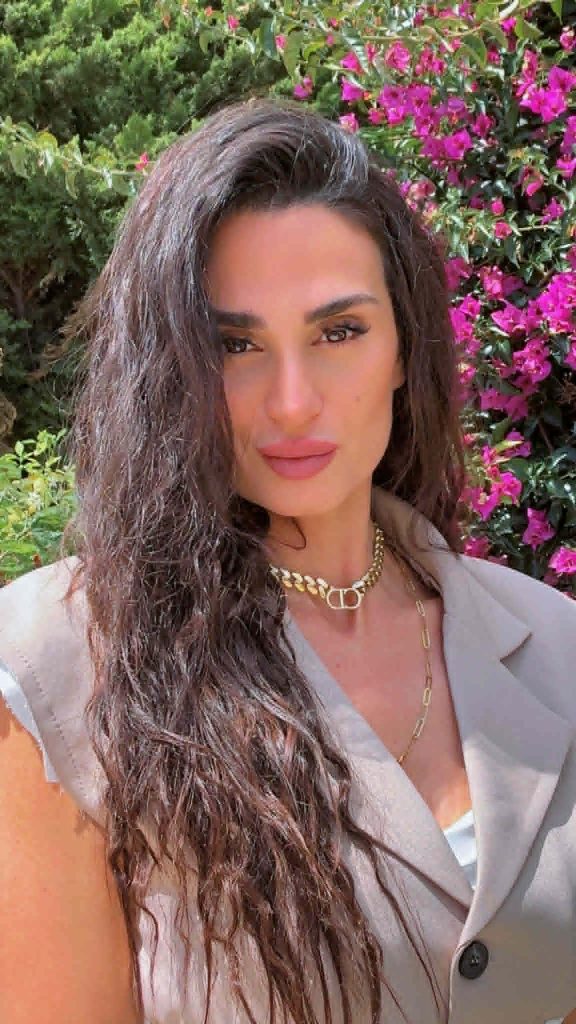
- We researched the village of Saline di Montebello and witnessed the charm of its nature and the elegance of its tranquility, something that inspires any poet or writer. Has your hometown influenced your writing since childhood?
A. 1 – There is no poetry without nature because it is precisely that unexplored greenery that has conveyed to me the living and profound message of life’s universal values, ever since I was a child. I gazed at the starry sky in summer or the snow falling on the pine tree in winter; it was like dreaming in a fairyland. Each season had its own story. Happiness was peace, the house surrounded by meadows, flowering hills, expanses of wheat, citrus groves, vineyards, and then the sea with its fresh air and the scent of saltiness mingling with that of roses and jasmine.
The return and departure of the swallows, the caress of dawn, a rainbow of circling leaves, the blue rain I breathed in with my eyes closed. Today, there’s more awareness, but nature still manages to surprise me with its miracles. It is divine grace, a glorification of existence and truth with cosmic significance. Through the breath and voice of nature, our aesthetic and spiritual attention is directed, exuding creativity, allowing our verses to reach the most distant places and readers in the world.
Sensitivity is the sublime message that connects peoples, opens minds and hearts, becomes a symbol of universal love and a bridge between different cultures and languages. Let’s not forget that writing, and poetry in particular, is a great woman, a great love, and a great Spirit. Nature is a mother, a charm that has shaped my thoughts, opening the door to her heart, making me feel less alone, revealing her secrets to me.
- As director of the literary magazine Le Muse, literary and art critic, translator, social and cultural activist, and editor of several Italian and foreign newspapers and magazines, has your work influenced your personal life and occupied an important place in it?
A. 2 – Everything done with love is not burdensome; you just need to know how to organize yourself, without disappointing one or neglecting the other, knowing how to distinguish between people and things, between blood relatives and society. Family is the nucleus of society, and no victory or wealth can be more valuable than sentiment, than love that goes beyond duty.
I manage to reconcile the two with enormous sacrifice because culture is my second home, a nest of memories that are origami in the tears of time.
- In your opinion, how would you define a successful writer? And is their success tied to their fame?
A. 3 – We need to understand what is meant today by the success or fame of a writer. I’ve seen so many who have lasted like meteors. The beauty of the situation is that it’s precisely the people who are incapable of judging who proclaim the winners, remaining in „sweet anticipation” of being proclaimed themselves, in a kind of favor where one hand washes the other. It’s a scene that continues a familiar pantomime and persists: only the actors change.
Many writers lack common sense and dignity. The true writer doesn’t aspire to be first, to dominate, to cast others in a bad light, even knowing he’s not the last. The use and abuse of social media has brought shame and ruin to society. Unfortunately, the truth isn’t accepted; we’re at the extremes of human values, anti-love, anti-family. Foul ideologies that condemn every form of tradition. Malice follows, accompanied by bad faith and superficiality, which, like an evil rain, sends discouraging, offensive, and often intimidating messages.
It’s well known to those with eyes to see and ears to hear that „dwarves” wait for the shadows to rise as the sun sets to feel like giants, and in their „mentally ill stables,” these damned, reckless creatures occupy the pedestal, knowing that they do so not for noble purposes but out of greed for power… Often, their anger turns into inconceivable crimes, and it’s a short step from delinquent to criminal. Bullying is not culture, and it will disappear like a swallow in a ball of sky, when the night spreads wounds of light.
In this hallucinatory era we’re living through, humanity’s sacred values are collapsing. Where are all these writers we hear so much about? They are characters created for commercial purposes, devoid of talent, who show off like carnival masks amidst ridiculous presentations and fake parties to attract and confuse the public. Their eyes are dull, and their voices are filled with moans. Writings and characters that seem made of papier-mâché are devoid of meaning. of soul, one feels like following a hearse.
- What is the best quality a writer or intellectual can possess?
A. 4 – The best quality a writer—or an intellectual—can possess is finding the antidote of truth, sensitivity, humanity, wisdom, and spirituality. We exchange the old for the new, the ancient for the modern; for this reason, one must transcend the Modern, where every form of writing, and poetry in particular, is the metabolization of the alienable and universal values of human brotherhood. Only in this way can we recover the eternal dimension of poetry that rises beyond time.
The true writer, not the puppeteer of the moment, should help talent express itself, rather than seek a way to suppress it, because he knows it is obscured. Italy and the entire world urgently need meritocracy and talent, to discover creative minds that give beauty to others, far from rivalry or morbid envy, but light and competence in the world of writing, where most „dirty” far from Those who possess the gift are few and far between.
Culture sets us free and is the blueprint for the future that, as it advances, leaves its mark of permanence. The soulmates of knowledge are knowledge and culture.
- You have approximately 26 published works, from Roots (1992) to Dhe tani flas (2024). Which work is closest to your heart and why?
A. 5 – As I answered in a previous interview, I have given no preference to any of my works, including the unpublished ones. Writing is our life, made up of joys and sorrows, shadows and lights, mourning, death and resurrection. Books are my creations. Can a mother differentiate between her children?
- In your opinion, does technology have a positive or negative impact on literature and why?
A. 6 – Like anything, the impact can be positive or negative depending on how it is used or the power it wields. I certainly prefer the eternal seasons of nature where the word meets the universe, the leaves fall silently, the colors warm the heart, massage the chest inside a faded sweater. I believe technique is merely an ornament, because the word is not only visionary, but also free and rebellious, it is pain and disdain but also a symbol of freedom—like the edelweiss on the summit, a symbol of courage, refinement, peace, rebirth, like the secret of long love, like a hurricane, or a wildfire. Those who love nature cannot help but hear the cry of the night where the earth moves like a wounded tiger, where the wind hisses, the silence is white, the scratching of broken branches amidst sharp and subtle cries.
- Is there a common thread that connects this cultural diversity that crowns your literary journey, from literature, to translation and criticism, to art and editorial leadership?
A. 7 – True culture existed. Indeed, those figures I read, studied, and frequented are now immortal names in the fields of opera, nonfiction, film, television, and literature: from Peter Russell to Luciano Pavarotti, from Vittorio De Sica to Lee Van Cliff, from Mike Bongiorno to Mario Del Monaco.
All the figures mentioned above loved writing, and especially poetry. There was passion in what they did; there was no competition. Poetry was born with me, and today all these indelible memories are joys, not poisons.
My translations began almost as a game, then so many people wrote to me asking to be translated: Japanese, Korean, Chinese, Albanian, American, Vietnamese, Indian, Serbian, Syrian, Lebanese, Spanish, Greek, Russian, etc.
A cultural exchange and sincere friendship between peoples began. Values can only be embraced by those who recognize them and live in contact with nature, a bit like the return of the Hermits to the woods. You will understand that every rain is always different, the shadows will seem like flesh and blood, the wind devours.
Our thoughts, or sprouts of snow, dress our solitude, the irony of a tear falling from the eyes of the moon lying on the bed.
- You’ve written about roots, humanity, the light of return, and ethics. In your opinion, what role does a writer play when addressing these values?
A. 8 – These are the values every writer should possess and defend; this is my way of looking at things. The writer should know that reality is made of information, not matter, and that reality is found in the universe, bringing a piece of the sky and spreading it over every wound on earth, over every lost tomb. But only those capable of love are able to interpret nature and the mysteries of the cosmos. Love is a starry sky, being close to those who need help to untie their knots of anguish.
He might find his skin torn and his memory left on the barbed wire, showing bloody hands and legs, his body bejeweled by the ink of bruises. He should be able to identify that pain that begs for the freedom that is a right and a conquest.
„We know that knowledge is the worst weapon of power; it instills doubt that it is the ‘medicine’ that saves life, that prays and works for good, that does not escape history, but redeems it.
- After all these successes, what is the next step for you on a literary and intellectual level?
A. 9 – The true writer first addresses the values of peace, but to address them one must distinguish them and know how to live them. Many write by collecting ‘crumbs’ scattered from one book to another; they talk about obvious things, but for many the important thing is to publish, to show off. They delude themselves into arousing anger, but they only make one feel sorry. ‘Empty’, useless books are being printed everywhere; the raw materials are missing: science and conscience, love, transformed into ever-expanding tumors.
They talk about war but then inflict it on others; they are absent from a serene and true life. They are slaves to economic interests, but they do not speak of natural disasters, deforestation, arson, murder, pandemics, pollution, indifference, immorality where destinies intersect in a whirlwind of emotions and conflicts. Tensions are created between those who want to emerge at all costs, leading them to difficult and aberrant choices. They seek unexpected allies, they cannot tolerate those who are better than them. They feel overshadowed and unleash tensions and revolts, transforming everything that is peace and love, study, sacrifice, merit into conflict. Far from words that drip with blood, shadow, and boundless depth, passion and suffering, therefore, love unbound by space-time limits. „The soul is the bearer of life, not being able to receive death; this is important, one must know how to care for it” (Socrates from the film by Roberto Rossellini, 1970).
We must train our reasoning faculties, seek clarity; this becomes transparency of the soul, light, communication that leads us to the truth. But all this is unknown to most, who pursue their own interests, considering others slaves, to manipulate them as they please. We must stand tall to maintain the dignity of asserting our freedom and intelligence even when reality always seeks to confuse us. Let us not forget that culture is also discipline, that inner joy that is born with being.
- If I had to give advice to someone seeking knowledge or to a writer, what would it be?
A. 10 – I would say, to be humanly authentic, to be yourself. Culture cannot be an empty word; it is the mirror of the soul, a small light that urges us day and night to fight for justice, to transform what makes a difference into harmony, where diversity does not become hierarchy, but shared wealth. Only in this way, one day, will the earth find peace with the universe. The monstrous events of these difficult days we are living through (floods, devastation, storm surges, misery, horrors) should give us pause. Let us not forget that culture only sets us free if it is directed toward the truth. We must support and defend it so as not to become artificial intelligence robots.
Don’t allow our faces to wear masks, but achieve the spiritual redemption that is our nourishment and our best cure. Losers and the deluded, feeling powerful, spread deafening noises and use any means to get what they want. But the true writer is one who lives in the truth, who deals with life as the true artist does, speaking of human values, crossing other frequencies, struggling to connect with the world without using arrogance as a subtle weapon. The artist, through writing, poetry, and painting, transforms the world into a garden and seeks the light to bestow it, escaping the extreme levels of evil that the true writer encounters. Writing is living and making others live.
On social media, one encounters beggars, scavengers, and predators, whose intent is to gain notoriety, to impose their name on the ignorant masses at all costs, with the approval of those who play along; there is nothing collective about it, but much more personal, about revenge. Their false actions certainly do not contribute to the memory of history. What gives and restores life is the spirit when the writer is pure; the rest is and remains only words scattered like chaff in the wind. The true writer doesn’t get confused, he stands out, goes beyond trendy jokes, barter, and spite, and follows his own path with knowledge and conscience.
His writing is new; it’s not the fragment or the sum of scraps he collects from others, as often happens and they pretend not to notice. A valid author is an honest person and doesn’t seek friends under the pretext of depriving them of their contacts. The same goes for washerwomen and unscrupulous and traitorous merchants for generations who feed on hatred and corruption. Time is the only guardian of memory.
The best word is wisdom; it’s not an obstacle course, a game of prizes, money that makes you great; words are feeling, not sentimentality, and the writer has much to learn before teaching and judging. Writing is an urgency that doesn’t distract, it hits you like a cyclone, shakes you, conquers you, otherwise it stops like a false thunder that dies out in its own noise.
Words are life and blood that deserve attention, unafraid of discomfort, wind, sea, storm, or fear. True writers have always suffered structural racism, suffering from a colonialism dominated by indifference, worse than armies. Often, envy thwarts them because they obscure nonentities through the violence they endure from mediocrity; invisibility becomes silence, insult. All of this is shameful and intolerable for culture and for a civilized country.
This meeting, a mutual gift of gratitude, I hope has added value and meaning to our friendly conversation. We both know that it is necessary to spread words like seeds of knowledge, warm, sincere, profound words that embrace the reader thirsting for the infinite.
Seek the galaxies of peace and hope, stay away from rapacious and opportunistic cliques, from false friends who praise and deceive them in exchange for squalid favors. It’s important to continue writing about human history, to bear witness to the light and not the darkness, to writing as a miracle, as a mystery that protects the beauty that the privileged recognize, the hierarchy of love that sets men free.
Transcendence scares demons; every pain can be transformed into Light. No army of madmen, hypocrites, and perjurers can extinguish the sun, the moon, or the stars.
I like to close this interview with a thought from Antonio Gramsci: „Culture is organization, the discipline of one’s own interests, it is the taking possession of one’s own personality, it is the conquest of a higher consciousness, through which one can understand one’s own historical value, one’s own function in life, one’s own rights, one’s own duties.” (A.G.)
And I would add that writing goes beyond the Modern, where the word becomes the metabolization of the alienable and universal values of human brotherhood.
Maria Teresa Liuzzo
© 2026, DetectivPress. Toate drepturile rezervate.