The early history of the Danish monarchy is shrouded in mystery and legend, with different sources attributing the title of first king to different figures. Among these, Hugleik (or Hygelac) and Gorm the Old stand out as pivotal figures in the narrative of Denmark’s royal line.
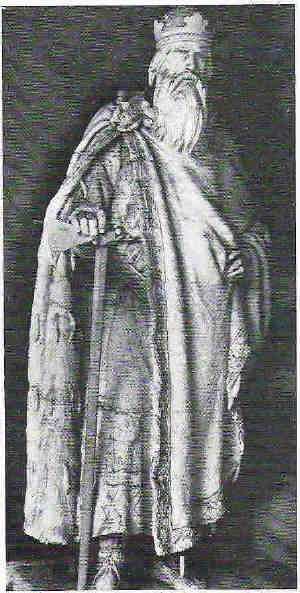
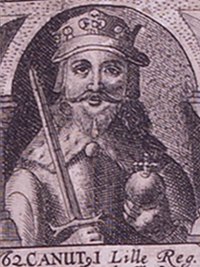
Hugleik, known in some texts as Hygelac, is often cited as the first Danish king mentioned in European historical sources. His name appears in the writings of Gregory of Tours, a 6th-century historian, who notes that Hugleik suffered a significant defeat in 515 AD during a naval expedition against the Franks. This event marks a pivotal moment in Denmark’s early history, suggesting that a structured leadership existed at the time and that Danish influence extended beyond its borders.
The Himlingøje burial site, located in Stevns, has led some historians to speculate that the rich grave goods found there belonged to early Danish royalty, possibly including Hugleik himself. These artifacts, indicative of wealth and power, suggest that the individuals buried there were of considerable importance, potentially ancestors of Hugleik. If this connection is true, Hugleik would be placed at the base of the Danish monarchy, linking him to a lineage that was seeking to establish its presence in the broader European context.
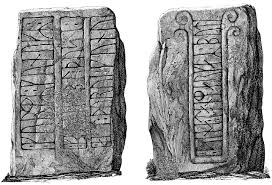
By contrast, Gorm the Old is often considered the first historically recognized Danish king, reigning from approximately 936 until his death around 958. Gorm’s legacy is more concrete, as he is associated with the Jelling Stones, monumental runestones erected in honor of his wife, Thyra Danebod. These stones are significant not only for their artistic value, but also for their historical importance, marking Denmark’s transition to a more unified and Christian kingdom.
Gorm’s reign is characterized by his consolidation of power in Jutland, and he is often described as the son of the semi-legendary king Harthacnut. According to the chronicler Adam of Bremen, Harthacnut seized control of Denmark from the young king Sigtrygg Gnupasson, establishing a dynasty that would lead to the rise of Gorm. Despite some historical ambiguity regarding the extent of Gorm’s kingdom—whether it encompassed all of Denmark or was limited to Jutland—his influence is unquestionable.
Conflicting accounts of Hugleik and Gorm the Old illustrate the complexities of early Danish history. While Hugleik is celebrated in literary sources as a formidable king, Gorm’s reign is better documented and recognized in archaeological discoveries. This duality raises questions about the nature of monarchy in early Denmark: was it a title held by multiple figures in different regions, or did it evolve over time as the nation itself began to take shape?
Denmark’s early kings, represented by figures such as Hugleik and Gorm the Old, reflect a rich tapestry of history that combines legend, archaeology, and historical documentation. While scholars continue to explore these figures, the history of the Danish monarchy remains a fascinating subject of inquiry, revealing the complexities of identity, power, and legacy in the early medieval period.
© 2026, DetectivPress. Toate drepturile rezervate.