
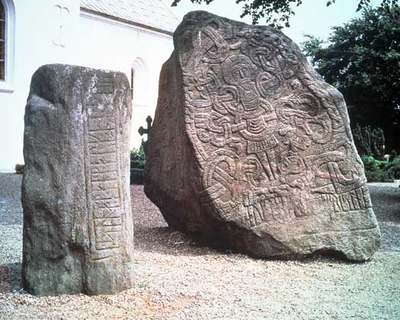
In the heart of Jutland, at the historic site of Jelling in modern-day Denmark, stand some remarkable rune stones that mark a turning point in Scandinavian history. Created in the 10th century, these monuments are closely tied to the royal lineage known as the House of Gorm and are widely regarded as symbols of the formation of the Danish kingdom.
The dynasty takes its name from Gorm the Old, the earliest Danish ruler confirmed by historical evidence. Although later traditions attempt to connect him to legendary figures such as Ragnar Lodbrok, these claims likely reflect a common royal desire to enhance prestige through mythic ancestry. What is certain, however, is the importance of Gorm’s son, Harald Bluetooth, who would become one of the most influential figures in Danish history.
Gorm ruled as a committed pagan and was said to oppose the spread of Christianity in his realm. His wife, Queen Thyra, was equally renowned—remembered in tradition as a strong and capable leader who may have played a role in defending Denmark’s southern borders. Their partnership left a lasting mark, both politically and personally.
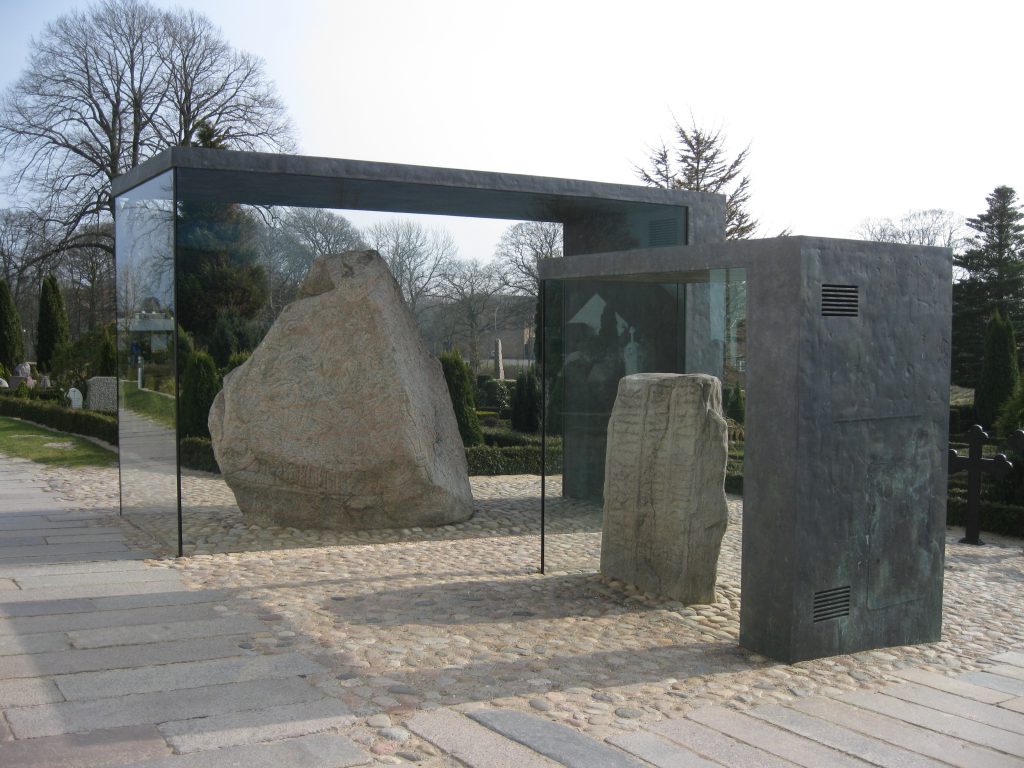
Around the year 950, Gorm commissioned the first of the Jelling stones in memory of Queen Thyra. Unlike many ornate monuments of the Viking Age, this stone is relatively simple in appearance. Its significance lies in the runic inscription, which honors Thyra as a figure of great importance—described as a source of pride for Denmark. This act highlights not only Gorm’s affection for his wife but also her standing within society.
Following Gorm’s death, a large burial mound was constructed at Jelling, possibly intended to house both him and Thyra in a traditional pagan setting. The site was further enhanced by an enormous stone ship arrangement—one of the largest ever discovered in Scandinavia—emphasizing the grandeur of the royal memorial.
However, when archaeologists later examined the burial chamber, it was found to be empty. The reason for this likely lies in a dramatic shift that occurred during Harald Bluetooth’s reign.
Initially raised in the pagan tradition of his parents, Harald underwent a profound religious change in the early 960s when he accepted Christianity. This decision made him the first Christian king of Denmark and marked the beginning of the country’s official conversion.
To reflect this transformation, Harald ordered the construction of a wooden church at Jelling. He then had his parents’ remains moved from their original burial mound and reinterred in consecrated ground. This act symbolized not only personal devotion but also a broader political statement about the new religious direction of the kingdom.
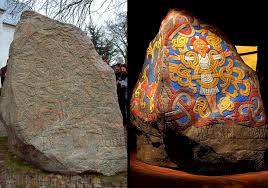
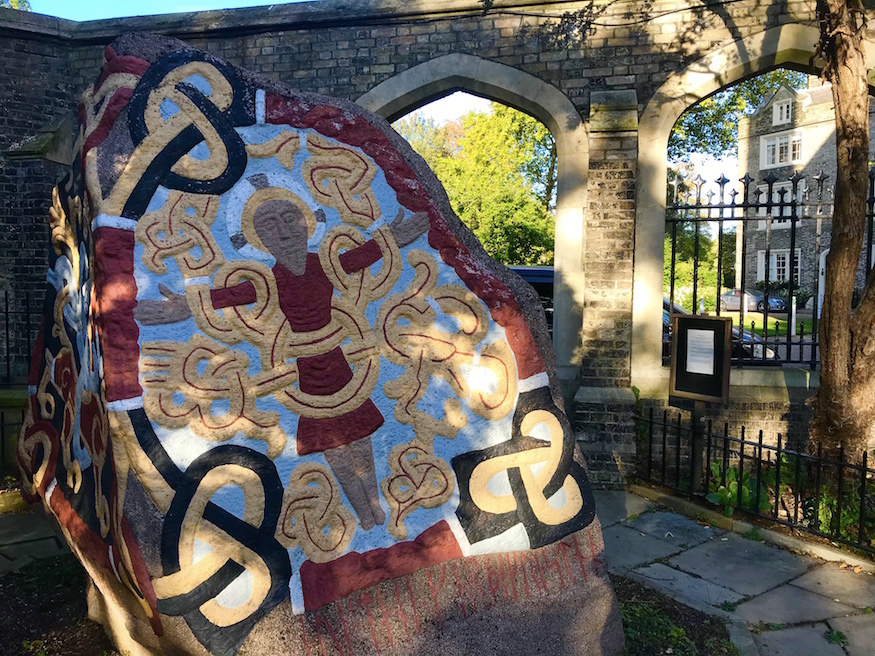
Harald commemorated these developments by erecting a second, larger rune stone. This monument is far more elaborate than the first and serves multiple purposes. Its inscription honors his parents while also proclaiming Harald’s achievements, including his claim to have unified Denmark and extended influence into Norway, as well as introducing Christianity to the Danish people.One side of the stone features what is widely considered the earliest depiction of Jesus Christ in Denmark—a figure with outstretched arms and a halo. This imagery reinforces Harald’s commitment to his new faith. Another side displays intricate animal motifs, including a large beast intertwined with a serpent, possibly symbolizing conflict or conquest.
Interestingly, while the site gives its name to the “Jelling style” of Viking art, the carvings on Harald’s stone actually belong to the later Mammen style, characterized by more complex and fluid designs.Originally painted in vivid colors, the Jelling stones would have been even more striking than they appear today. Though time has faded their pigments, modern research has allowed partial reconstructions of their original appearance.
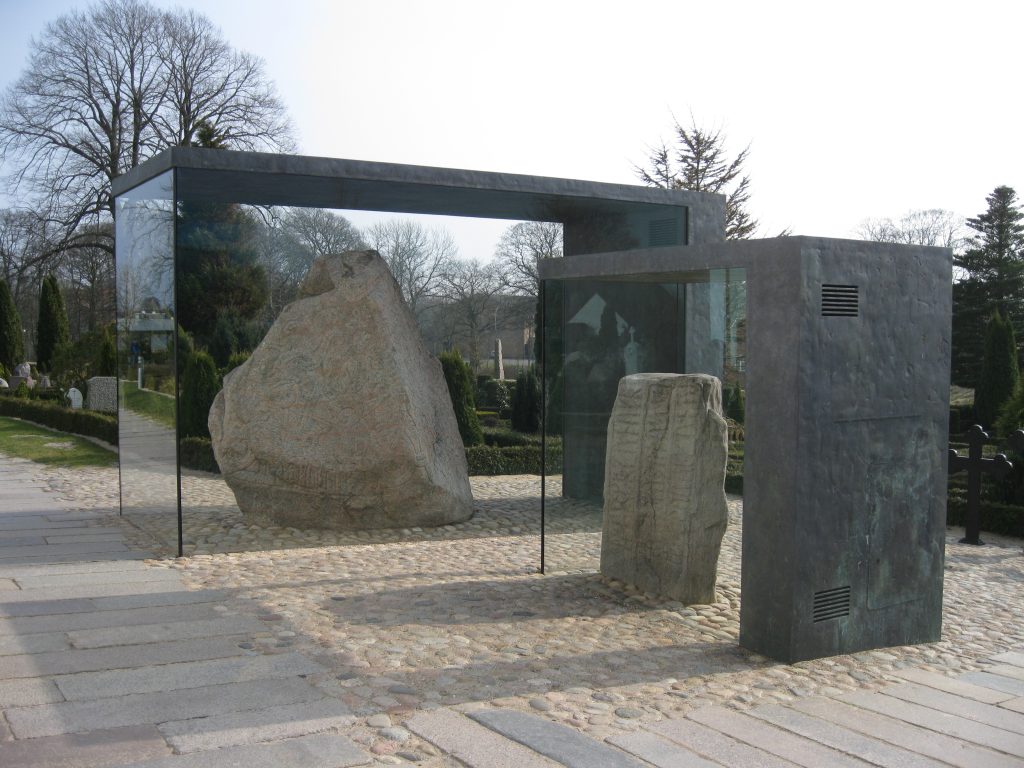
Today, the stones remain at Jelling, carefully preserved and protected. They are often referred to as Denmark’s “birth certificate” because they document the unification of the kingdom and its transition to Christianity. Beyond their historical value, they also stand as deeply personal monuments—expressions of family loyalty, political ambition, and cultural transformation.
Together, the Jelling stones capture a defining moment in Danish history, where ancient traditions and new beliefs converged to shape the identity of a nation.
Main reference: https://www.scandinavianarchaeology.com/the-jelling-stones-and-the-birth-of-denmark/
© 2026, DetectivPress. Toate drepturile rezervate.