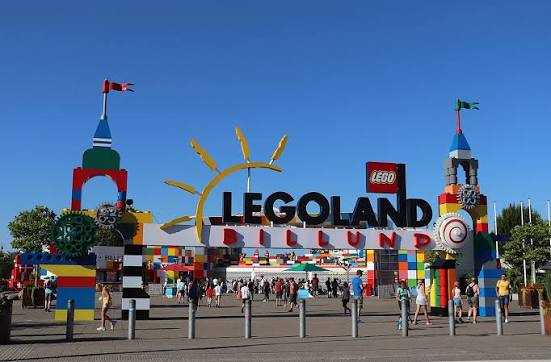
LEGO AND LEGOLAND is one of Denmark’s most recognizable contributions to global popular culture. What began as a modest toy-making business in the 1930s developed into the LEGO Group, while the extraordinary popularity of its creations later inspired an entirely new concept: a place where the miniature worlds built from LEGO bricks could become a destination in their own right.
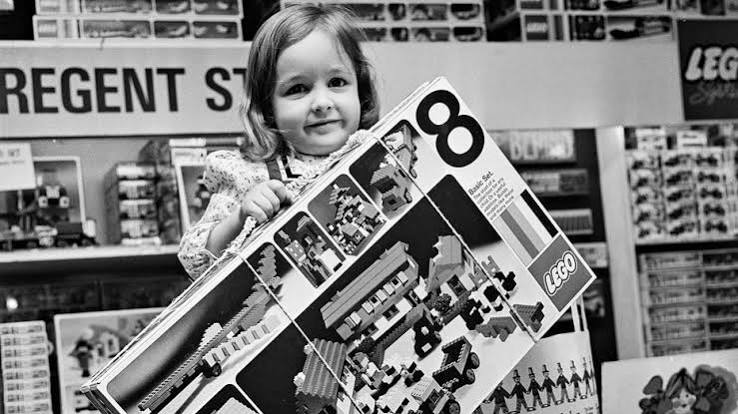
That destination was LEGOLAND Billund, opened in 1968 beside the LEGO factory. More than half a century later, the original Danish park remains both a major family attraction and a monument to the history of an idea that transformed play, design and imagination.
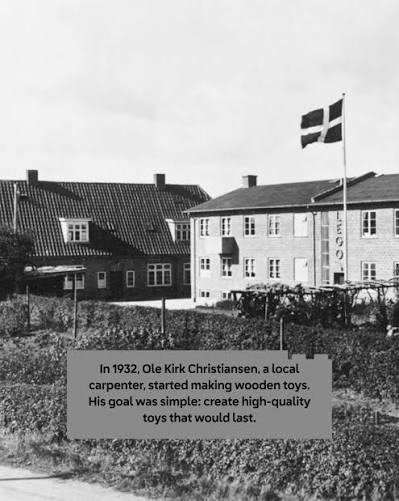
The history behind LEGOLAND begins decades before the park itself. In 1932, Danish carpenter Ole Kirk Christiansen began producing wooden toys in Billund. Denmark, like much of Europe, was living through difficult economic circumstances, and Christiansen had to adapt his woodworking business to survive.
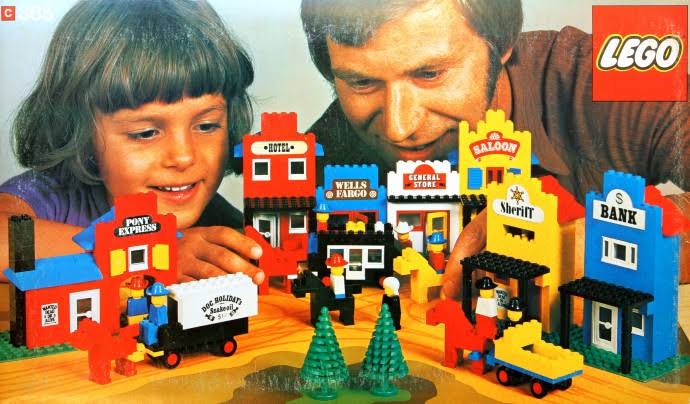
Two years later, in 1934, he gave his company a name that would eventually become famous throughout the world: LEGO.
The word was created from the Danish expression “leg godt,” meaning “play well.” The name reflected a philosophy that would become fundamental to the company: children should be encouraged to learn, create and explore through play.
During its early years, LEGO produced wooden toys, including vehicles, animals and other carefully crafted objects. Yet the company was willing to experiment with new technologies. In the years following the Second World War, plastics increasingly offered manufacturers possibilities that had previously been unavailable.
LEGO entered this new era by investing in plastic injection-moulding technology. In 1949, the company introduced an early version of its plastic building bricks. The decisive technological development came in 1958, when the modern LEGO brick principle was patented, establishing the interlocking system that would become central to the LEGO universe.
The simple brick contained an extraordinarily powerful idea: individual pieces could be repeatedly connected, separated and recombined into almost unlimited constructions.
Ole Kirk Christiansen’s son, Godtfred Kirk Christiansen, played a crucial role in transforming the family business into an international company.
Rather than seeing LEGO bricks simply as individual toys, Godtfred developed the concept of a coherent “System in Play.” Different LEGO elements could belong to the same creative universe and be combined across sets and themes.
This philosophy helped distinguish LEGO from conventional toys. A finished toy generally represented one specific object, but LEGO bricks invited children to become designers and builders themselves. A house could be dismantled and transformed into a car; the car could become a ship; the ship could disappear and its bricks could form something entirely new.
As LEGO products became increasingly successful, Billund itself began to change. The company grew into an important employer, while visitors became curious about the factory and the remarkable models constructed from LEGO bricks.
That growing curiosity would eventually lead directly to LEGOLAND.
The origins of LEGOLAND Billund are surprisingly practical.
By the 1960s, more than 20,000 people a year were visiting the LEGO company in Billund. Many were particularly interested in the detailed LEGO models displayed at the factory. Their enthusiasm was good publicity for the company, but accommodating so many visitors also created practical difficulties for an active industrial site.
Godtfred Kirk Christiansen therefore began considering how the models could be exhibited separately from the factory.
What initially appeared to be a solution to a logistical problem gradually became something much more ambitious.
According to LEGOLAND’s own historical account, the early project was relatively modest. At one stage, the idea involved an elderly couple selling tickets and coffee to visitors. But the concept continued to develop.
Instead of simply creating an exhibition, LEGO would create an environment in which visitors could enter the imaginative world associated with the brick.
The result was LEGOLAND.
June 7, 1968: LEGOLAND Billund Opens
The first LEGOLAND park officially opened in Billund on June 7, 1968.
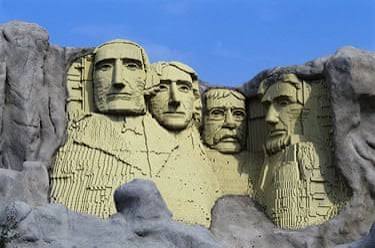
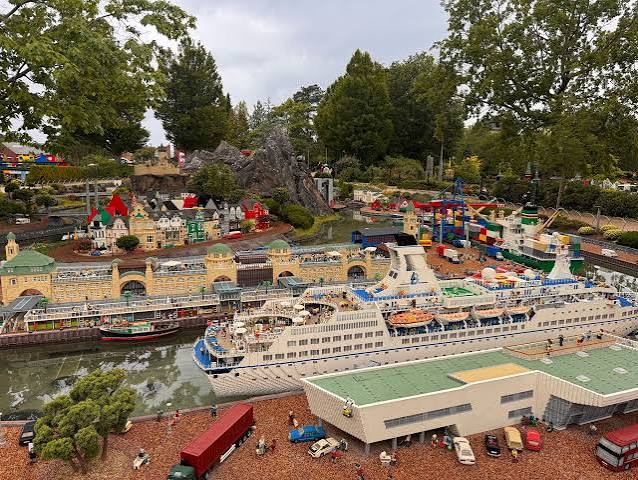
At the heart of the new attraction stood Miniland, a miniature world created from LEGO bricks. Landscapes, buildings, streets and recognizable scenes demonstrated what could be achieved when the familiar children’s construction toy was used on an architectural scale.
Miniland was not simply another attraction inside the park. It represented the original idea behind LEGOLAND itself.
The organizers expected approximately 300,000 visitors during the first season — an estimate that was regarded as highly optimistic at the time.
Reality exceeded those expectations dramatically.
Within only a few months, the predicted attendance had already been reached. By the end of the season on October 30, 1968, approximately 625,000 people had visited LEGOLAND Billund.
The opening was so successful that the park’s staff struggled to accommodate the crowds. LEGO’s historical account recalls that on the opening day even senior company employees found themselves helping with ordinary restaurant duties because of the extraordinary number of visitors.
What had begun partly as an answer to overcrowded factory visits had become one of Denmark’s most promising tourist attractions.
Miniland remains one of the defining characteristics of LEGOLAND Billund.
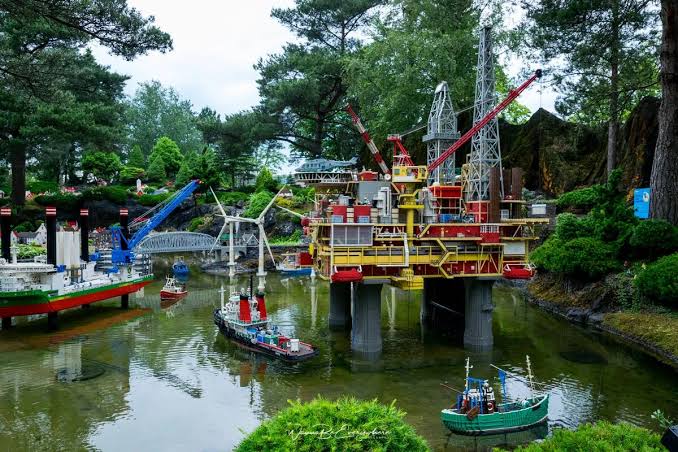
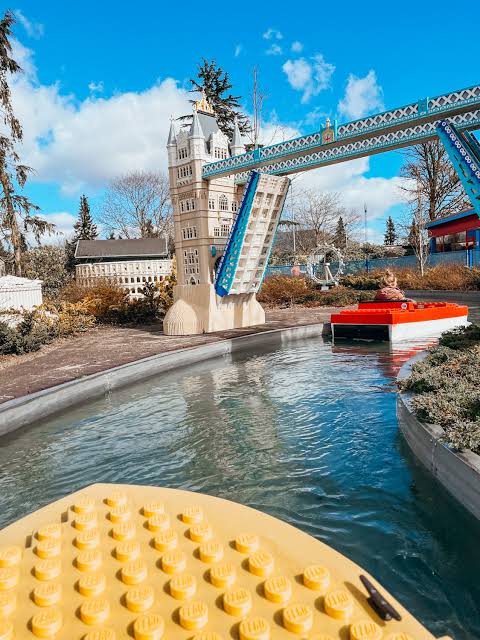
The principle is simple but visually powerful: visitors can walk through miniature representations of cities, landmarks, buildings, transportation systems and everyday environments, all interpreted through LEGO construction.
Today, LEGOLAND states that Miniland contains around 20 million LEGO bricks. Its miniature world includes famous buildings and urban environments from different parts of the globe.
This concept captures something fundamental about LEGO itself. A brick is tiny, but thousands or millions of bricks can produce a complex environment. Miniland therefore translates the experience of playing with LEGO into an architectural spectacle.
It also connects generations. Adults who played with LEGO as children can recognize the same creative principle while younger visitors discover increasingly sophisticated models and interactive experiences.
LEGOLAND did not remain frozen in its original 1968 form.
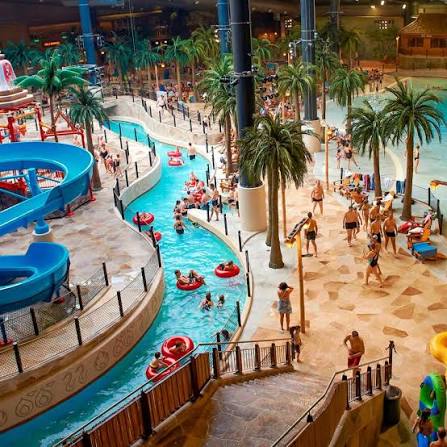
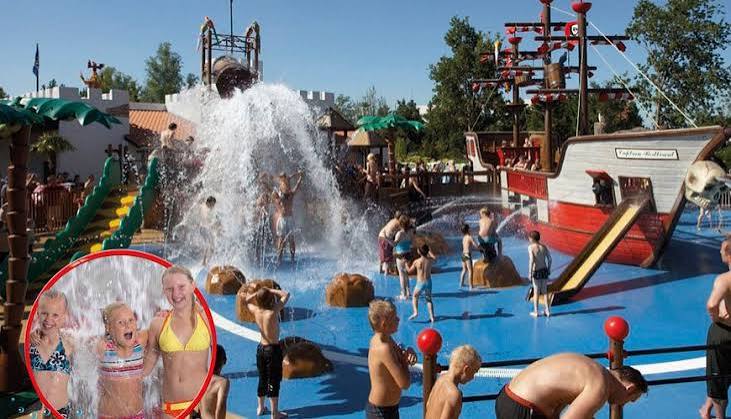
As visitor numbers increased, the park gradually evolved from an exhibition centred on LEGO models into a much larger family amusement park. Rides, themed environments, interactive attractions, shows and entertainment experiences were added over the decades.
The important difference, however, was that LEGOLAND attempted to integrate these attractions into the visual and imaginative language of LEGO.
The park therefore became more than a conventional amusement park decorated with a famous brand. Its identity continued to depend on the concept that had inspired Miniland: transforming things normally constructed on a child’s floor or table into environments large enough to enter and explore.
Modern LEGOLAND Billund combines the historic miniature world with roller coasters and attractions associated with LEGO themes and characters. The park currently advertises more than 45 rides and attractions and around 80 million LEGO bricks throughout the site.
Among its attractions are experiences connected with LEGO NINJAGO, roller coasters and the iconic LEGOTOP observation tower, while Miniland continues to occupy a symbolic place at the centre of the park.
The story of LEGOLAND is inseparable from the transformation of Billund.
LEGO’s expansion brought employment, investment and international attention to the town. Billund Airport also became an important part of the area’s development, helping transform what had once been a relatively small Danish community into a destination receiving visitors from many countries.
LEGOLAND reinforced this transformation.
Families who might never otherwise have travelled to this part of Jutland began arriving specifically to experience the birthplace of LEGO. The connection between company, town and attraction became unusually strong: visitors were not simply going to a LEGO-themed park; they were travelling to the Danish community where the LEGO story itself had begun.
In this sense, Billund gradually became a geographical home for an imaginary universe known around the world.
The success of the original Danish park eventually demonstrated that the concept could work outside Denmark.
Beginning in the mid-1990s, additional LEGOLAND parks opened internationally, bringing the combination of LEGO models, themed attractions and family entertainment to audiences in Europe, North America and Asia.
This international expansion transformed LEGOLAND from a Danish attraction into a global theme-park brand.
An important corporate change occurred in 2005, when, following a difficult financial period for the LEGO Group, the four LEGOLAND parks operating at the time were sold to Merlin Entertainments.
Yet despite the global expansion and changes in ownership, Billund retains a unique historical position.
It is the original LEGOLAND.
Every subsequent LEGOLAND park ultimately traces its concept back to the crowds who came to see LEGO models at a Danish factory and to Godtfred Kirk Christiansen’s decision to create a dedicated place for them.
The historical importance of LEGOLAND Billund lies partly in the unusual relationship between a manufactured object and a physical destination.
LEGO had already given children the ability to create imaginary environments. LEGOLAND reversed that relationship: instead of children bringing LEGO worlds into their homes, families could physically enter a LEGO-inspired world.
That distinction helps explain the longevity of the park.
The attractions have changed, technology has advanced and new generations of LEGO themes have appeared, but the central idea remains remarkably close to the original concept of 1968: imagination made visible through construction.
There is also a distinctly Danish dimension to the story. LEGO emerged from traditions associated with craftsmanship, functionality, simplicity and quality, while the company’s philosophy emphasized creativity rather than passive entertainment. LEGOLAND extended those principles into tourism.
A practical problem — thousands of people wanting to visit a factory — ultimately produced a cultural landmark.
The history of LEGO and LEGOLAND is ultimately a story of transformation.
A carpenter’s workshop founded in Billund in 1932 became an international toy company. Wooden toys gave way to plastic bricks. Individual building pieces developed into a system of creative play. Factory visitors inspired an exhibition, and that exhibition grew into an amusement park attracting hundreds of thousands of people in its very first season.
Then the Danish park became the model for an international network of LEGOLAND destinations.
Yet the beginning remains in Billund.
LEGOLAND Billund represents an important chapter in the history of Danish design, entrepreneurship and popular culture because it demonstrates how a remarkably simple object — the LEGO brick — could inspire something far larger than a toy.
From the miniature streets of Miniland to modern rides and themed adventures, the park continues to embody the principle contained in the company’s Danish name: “leg godt” — play well.
And perhaps that is the most enduring legacy of LEGOLAND. More than five decades after the gates first opened in Billund, generations of visitors continue to discover the same idea that made LEGO extraordinary in the first place: with imagination, even the smallest brick can become the beginning of an entire world.
Sources
- LEGOLAND Billund Resort — “About LEGOLAND”
— official history and information about the origins and development of the original LEGOLAND park. (LEGOLAND® Billund Resort
)
- Denmark & Me — “The History of Lego and Legoland”
— historical background on LEGO, Billund and the development of LEGOLAND. (Denmark and Me
)
- The Ledger — “Legoland Story Dates to 1932 in Denmark”
— historical account tracing the story to Ole Kirk Christiansen’s beginnings in Denmark.
- LEGO History — “The First LEGOLAND Park”
— official LEGO historical archive on the creation, opening and international legacy of LEGOLAND Billund. (LEGO® Shop
)
© 2026, DetectivPress. Toate drepturile rezervate.