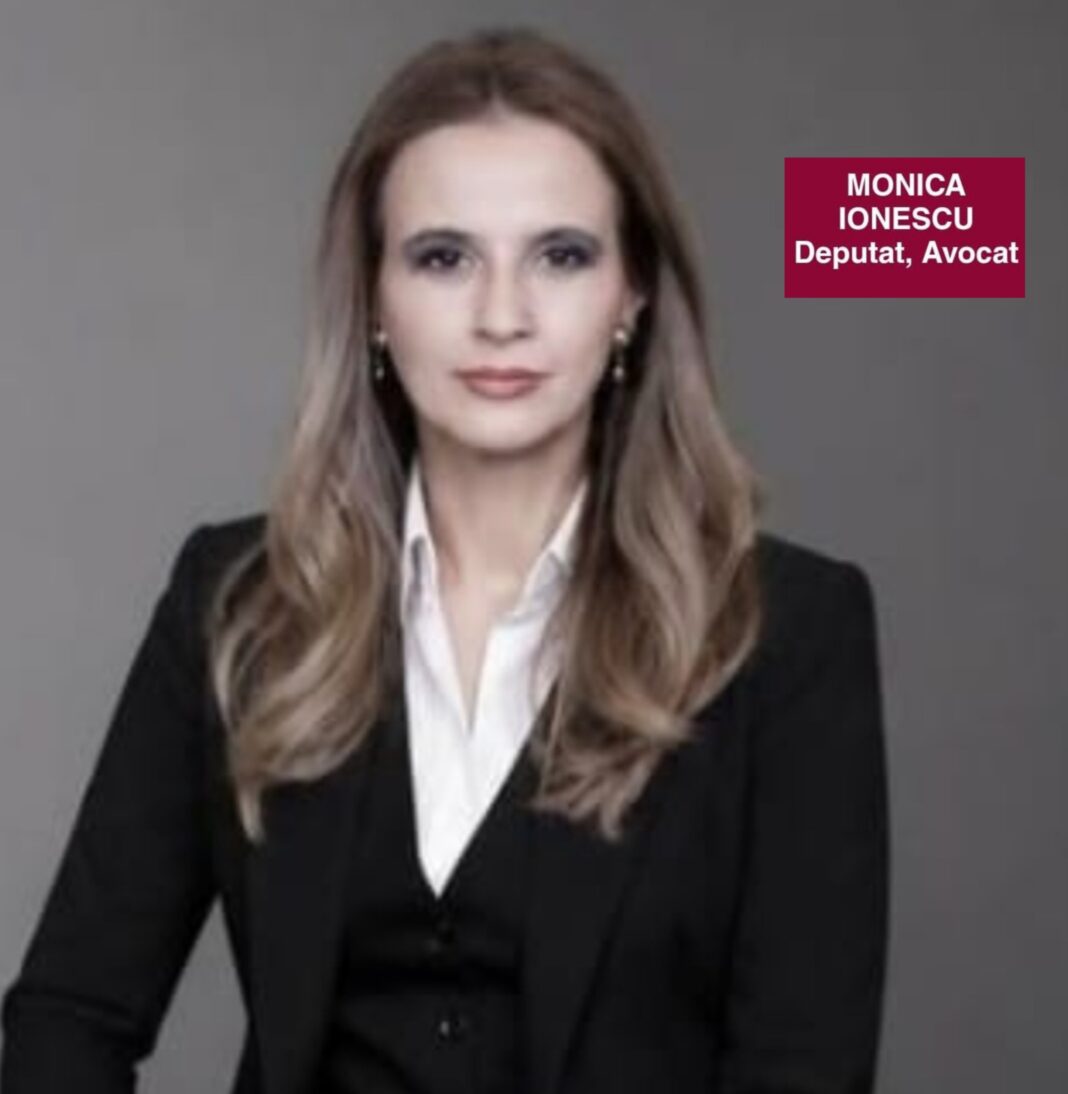
The press release by MP Monica Ionescu is part of the debate on the reform of the European Union’s decision-making mechanisms, particularly regarding the extension of qualified majority voting (QMV) to the Common Foreign and Security Policy (CFSP).
On August 31, in Wicklow , Ireland, during the informal Gymnich meeting, 11 foreign ministers signed a letter in which their respective states supported the transition from unanimity to majority voting in foreign policy: Austria, Belgium, Denmark, Finland, France, Germany, Luxembourg, the Netherlands, Romania, Spain, and Sweden agreed, in principle, to renounce their right of veto in the future—the only shield a small state has in the EU Council against decisions taken by larger countries. The Wicklow letter is a political initiative and does not in itself amend the treaties. For now, from a legal perspective, nothing has been lost. But in politics, the sovereign is he who decides on exceptions. Those who cannot say „no” to war or peace no longer decide: they simply carry out what others decide.

What does this mean for an ordinary Romanian citizen? It means that, in the future, Romania could be involved in a decision regarding war, peace, or sanctions that it doesn’t agree with, even if it votes against it. It’s the difference between being a sovereign state and simply being counted along with others. It’s explained that this choice arises from efficiency concerns and that the veto blocks the decision-making process. True, it does: dignity always blocks abuse, and that’s precisely why it exists.
“ I learned, observing other nations, that there can be no love for Europe if it starts with contempt for one’s own people. How can you love Europe without first respecting the citizens who sent you there? How can you claim to represent Romania when you sign to deprive it of the ability to say ‘no’? In our country, the people learned this from the foreign press. They were later told that they don’t understand the subtleties, while Minister Oana Toiu acted without consulting Parliament,” said Deputy Monica Ionescu , Attorney at Law, of the Romanian Parliament.
In Germany, a similar act would have first been vetted by the Bundestag. In Ireland, where the document was signed, citizens are called to the polls whenever significant issues are raised, especially treaty-related ones. In Romania, however, the agreement was signed in silence and only later explained, in a video in September 2026, that nothing is lost. It’s true: legally, nothing has been lost yet, but politically, much has been given up. What is conceded in high politics leaves its mark. Poland took a different approach and did not sign, as did the Baltic states and states such as Italy and Slovakia.
” For this reason, I request that Romania withdraw its signature from the Wicklow Letter. The provisions of Articles 2 and 148 of the Constitution, together with those of Law No. 590/2003, require that such commitments be supported by the necessary mandates and approvals. In the case of the Wicklow Letter, such a mandate does not exist,” concluded MP Monica Ionescu.
Source: www.jurnalcentral.ro
Constitutional and procedural strength: The central argument rests on the lack of democratic and procedural legitimacy. Challenging the lack of a prior parliamentary mandate (citing the constitutional articles and the law on international agreements) constitutes a solid criticism in terms of domestic public law. Tension between sovereignty and EU efficiency. The text reflects the classic conflict between the protection of national sovereignty (through the right of veto) and the EU’s need to act promptly on international markets without paralyzing blockades.
The MP, Attorney MONICA IONESCU, acknowledges that the declaration does not directly modify the treaties (it is non-binding), but underlines its political weight, highlighting how the preventive renunciation of the veto could weaken the position of small and medium-sized countries in future European negociation.
Cătălina Mioara Georgescu/journalist
© 2026, DetectivPress. Toate drepturile rezervate.