„LE MUSE” – INTERNATIONAL BI-MONTHLY MAGAZINE OF ART AND CULTURE
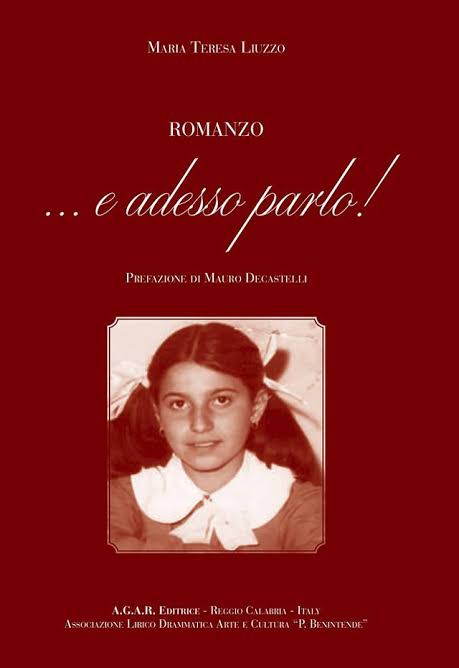
– „E adesso parlo!” (And Now I Speak!) – A novel by Maria Teresa Liuzzo
Featuring the renowned actor, director, literary critic, writer, and translator Uranus as a key figure.
With his excellent review of the novel by Editor-in-Chief Dr. Prof. Maria Teresa Liuzzo, „E adesso parlo!”, he offers evocative words: „It represents the stylistic backbone of writing of distinguished class and the aesthetic refinement characteristic of the finest Italian prose—an intellectual philology…”
A novel that defies the easy labels often applied by certain contemporary critics.
– Uranus describes the intellectual elite to which our dear Maria Teresa Liuzzo belongs in these terms: scholars of linguistic harmonies, lovers of the word –
Not merely writers, but artists of the word (Uranus)
…E adesso parlo! – A novel by Maria Teresa Liuzzo.
Her writing boasts an illustrious lineage, possessing the driving rhythms of Classical Greek while simultaneously drawing upon Decadent stylistic elements of a Kafkaesque nature; it embodies the aesthetic refinement of the finest Italian writing; An intellectual philology that successfully harmonizes physicality with aesthetic moments—leaving an indelible mark on the reader’s memory—this is a gifted, lyrical form of storytelling; though composed of pure prose, it takes on the quality of narrative poetry line by line. All of this is revealed in the novel …E adesso parlo! (…And Now I Speak!), in which Maria Teresa—long a standard-bearer for the sanctity of life and a virtuoso of the Word—offers a story that transcends the „banal,” anonymous provinces. Instead, it is a tale of every world and every person, a journey into the secret depths of the psyche and the heart of human tragedy, recounted with the irrepressible, indelible pride of her Calabrian heritage.
This novel eludes the easy labels often applied by contemporary critics; it creates a physical dimension where the protagonist is not merely „Mary,” but rather a physicality that merges with the attentive reader. It is as if the author, from the vantage point of her own vision, manages to embed herself within the story—which, while clearly autobiographical, seems to invite the reader-spectator to play an active, leading role in the unfolding events. Like an invisible guiding entity, Maria Teresa uses her writing—at once cerebral and powerfully physical—to lead the reader into a state of lyrical reverie. This occurs even as the narrative unfolds through a sequence of violent drama and painful experiences, punctuated by the distant rhythm of kettledrums that heighten the spirituality of Mary (Maria Teresa). It is a passionate narrative steeped in the tragic cadences of the Greek tradition; it is the story of a soul sitting beside you, having come to visit and share its own tale. It is a novel that is at times not a novel, in the sense that its „narrative” realism transcends mere literary artifice—even though the writing clearly reflects illustrious influences, such as the aforementioned Hellenic roots and, even more so, Kafkaesque atmospheres. These elements shape the work’s harmonious resonance into a concert of voices tuned to melancholic chords and the harrowing cries of the inner self. Memory takes on physical form and becomes a Story; though painted in bold—or perhaps dark—hues, in the author’s wise hands, it transforms into a captivating, multicolored kaleidoscope set within a hell (a very real one) confined by four walls. The author deserves credit for masterfully orchestrating these voices—an all-female chorus enduring silent yet bloody violence at the hands of men who are often mere supporting players, frustrated by the constraints of social convention.
Mary, the protagonist, embodies these „Southern” women—though „Southern” here refers not merely to geography, but to a social condition of female marginalization. This is a reality shared not only by many women in Southern Italy but also by those in places like Kabul or even in affluent American towns. She is a woman who finds within herself the strength to change her situation (a theme seen in countless past examples). Ultimately, this is a novel that celebrates the sanctity of life.
It is a hymn calling for respect for the female spirit; it seeks neither revenge nor violent retribution. Instead, if redemption is to be found, it lies in forgiveness—the one Christian truth that is the twin of true life. (URANUS – director, actor, writer, literary critic, and translator). She has translated the following novels into English: Non dirmi che ho amato il vento and L’ombra affamata della madre. Together with another director, she plans to make a film that encapsulates the characteristics of Neorealism, building upon the Liuzzo Trilogy. Her other novels include La luce del ritorno and Piogge verdi di smeraldi. Maria Teresa Liuzzo’s books have been translated into 32 languages. Many unpublished works are set to be released soon.
© 2026, DetectivPress. Toate drepturile rezervate.