Reprinted from the publication ORDINEA ZILEI: https://ordineazilei.ro/fara-limite-alin-stoica-tenorul-inimilor-pentru-care-muzica-este-una-dintre-cele-mai-mari-forme-de-vindecare-povestea-din-spatele-scenei/?fbclid=IwY2xjawUm85ZleHRuA2FlbQIxMQBwZG9mBXNydGMGYXBwX2lkEDIyMjAzOTE3ODgyMDA4OTIAAR5hmTBPyvKyQYPO7m301WU7smCP5Zng-EvNRZnx4OcFaogVpuh0jHwU3NhJiA_aem_p9Kb70PiHNoIp4KwTKriXg
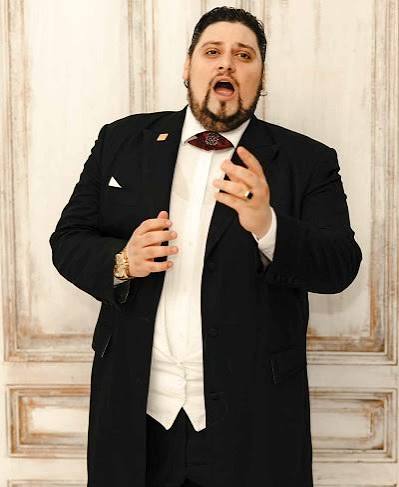
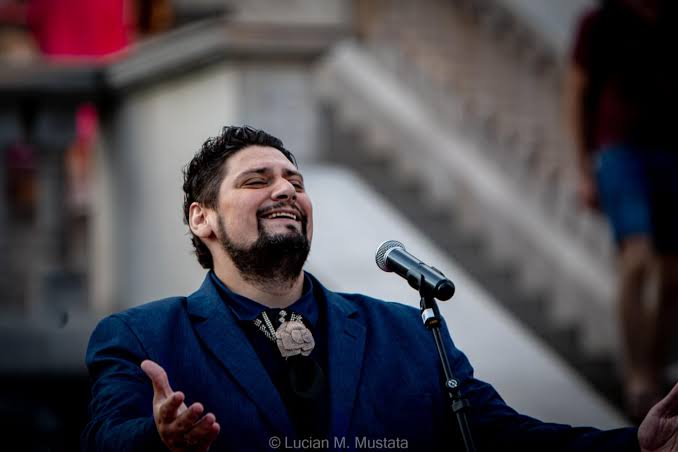
Alin Stoica holds the souls of his audience in his voice, known to the world as the „tenor of hearts.” His voice has captivated thousands of lovers of fine music, resonating both at home and abroad.
He embraces every role entrusted to him with joy; his repertoire includes Pinkerton in Madama Butterfly, Don José in Carmen, Turiddu in Cavalleria Rusticana, Alfredo in La Traviata, Rodolfo in La Bohème, Mario Cavaradossi in Tosca, Hamlet in Franco Faccio’s Hamlet, and Ciprian Porumbescu in Lăsați-mă să cânt (Let Me Sing).
„But the role closest to my heart remains Ciprian Porumbescu in Lăsați-mă să cânt. There is something about it that touches me deeply. Perhaps because he is a Romanian character, or because he embodies sensitivity, destiny, ideals, and nobility—or perhaps because he carries a certain vibration of our people. I truly adore the role; whenever I perform it, I feel not merely that I am playing a part, but that I am encountering a very intimate side of myself. It is the role into which my heart settles most naturally,” confides the artist to Ordinea Zilei.
For him, music has been a form of healing, so he chose to help others find solace for their souls through the beauty he shares with every stage appearance. He does this naturally; behind his generosity lies a life story that fully illuminates the man behind the artist—Alin Stoica. „My musical story didn’t begin in a family of artists, but in a home where music was loved sincerely and naturally—like a form of light. I was raised by my grandparents, the people who became my parents in the truest sense of the word. They shaped me, kept me on the right path, and instilled in my soul the values of respect, hard work, and dignity. My grandfather loved music immensely; our home was filled with the sounds of cassette tapes, records, great vocalists, Christmas carols, canzonette, and operas. Without my realizing it, that was where the first brick of my destiny was laid,” the artist says.
„Music can soothe, it can heal, and it can express what the soul cannot articulate on its own.”
He looks back with nostalgia on those days, when his first living connection to music came through Christmas carols. Year after year, he would go caroling, listen to the Madrigal Choir and great vocalists; that universe held a near-sacred quality for him. „I believe that was where the first fundamental truth about the voice awakened within me: that music can soothe, it can heal, and it can express what the soul cannot articulate on its own. Later, I realized that my musical talent was, in essence, discovered while singing carols,” the tenor explains.
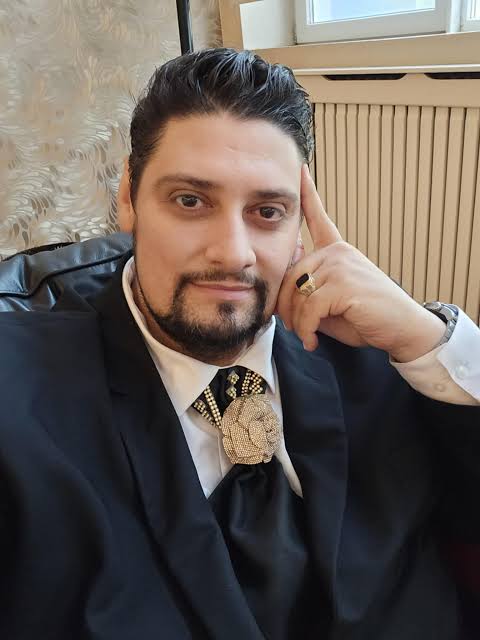
Until the eighth grade, he never once pictured himself on stage. He was drawn to mathematics and computer science—coming from a math-and-informatics academic track—and lacked a classical musical background; he hadn’t studied an instrument since childhood. Alin Stoica did not follow the typical path of a child „born for the conservatory.”
„But God and life have their own way of arranging things. My godmother noticed something special in my voice and insisted I be tested. That is how I ended up at the ‘Dinu Lipatti’ Music High School, where I met teacher Cristina Măgureanu—the person who saw not just a voice in me, but a path. That was the turning point. From that moment on, music was no longer merely a possibility; it was my calling.
Later on, as I walked this path, idols appeared—the voices that left their mark on me and provided my points of reference. Luciano Pavarotti was a revelation to me, and a record of his, ‘O sole mio’, made a profound impression. I listened to Plácido Domingo as well and admired the great tenors, but beyond admiration, what I felt was a door opening somewhere deep inside me. And once opened, I could never close it again,” explains the interviewee.
READ ALSO: WITHOUT LIMITS! Simona Strungaru lives her life to the sound of piano chords and tells her musical story through the art of conducting. Composition leads her toward new horizons.
His serious training in the field began at the „Dinu Lipatti” Music High School in Bucharest—a place he credits with allowing him to enter this fascinating universe. It was at this school that he took his first significant steps and began to understand the meaning of musical discipline, rigor, study, patience, and respect for the voice.
„For a child coming from a background without systematic musical training, this transition was immense and far from easy, yet it proved to be providential. During that time, my teacher, Cristina Măgureanu, played a pivotal role. She was the first person to place the beginning of this journey in my hands—both literally and figuratively. She saw a path for me before I even had the courage to see it clearly myself. There are people who enter your life and change your destiny quietly—simply through their kind gaze, their intuition, and their belief in you. For me, she was one of those people,” the musician emphasizes.
„Vocal training is a lifelong school.”
Next came the National University of Music in Bucharest, Faculty of…
..in Musical Performance (vocal studies), where things reached a new level. „I began to truly shape myself as an artist,” notes Alin Stoica.
A pivotal figure in his development was Maestro Ionel Voineag; under his guidance, Stoica solidified his vocal identity and deepened his understanding of the repertoire.
He credits the maestro with imparting not only technical skills but also a specific perspective on the profession—one defined by seriousness, nobility, and a sense of responsibility.
Beyond his academic studies, the tenor had the opportunity to hone his craft through masterclasses with renowned artists, including Marina Krilovici, Rockwell Blake, Mariana Nicolesco, and Liora Maurer. „All these encounters helped me grow, assess myself, and discover who I am, while realizing that a true artist never stops learning. Vocal training is a lifelong school,” the artist reflects.
He did not walk this path—navigated step by step—alone; he was supported by people to whom he remains deeply grateful.
READ ALSO: WITHOUT LIMITS! Mariano Castro, a soldier of art fighting for a better world
„I am not one of those people who believe they are ‘self-made.’ There have been providential figures in my life—people without whom my path would have been different, or perhaps far more difficult. My first support came from my family, from my grandparents, who were mother, father, and sanctuary to me all at once. They raised me, believed in me, and walked hand-in-hand with me when I didn’t yet know what lay ahead. Without them, the man Alin Stoica is today would not exist.
My godmother also played a decisive role. She was the one who noticed my voice and had the inspiration to say, ‘This child needs to be taken somewhere to be heard!’ It might seem like a simple gesture, but sometimes, just such a gesture changes everything. Then came my teacher, Cristina Măgureanu, who guided and encouraged me, giving me that first serious push. When an experienced person sees something in you, you begin to view yourself through different eyes, too.
Artistically, Maestro Ionel Voineag is one of the pivotal figures in my development. From him, I learned not only about vocal production but also about artistic bearing, patience, rigor, a sense of style, and that tenor’s dignity—which is measured not merely by high notes, but by the way you carry yourself in your profession. There were other important people along the way, too—teachers, conductors, colleagues, and artists—from whom I learned by watching closely and absorbing everything with my soul.” „But if I were to reflect on the roots of my journey, I would put it this way: my grandparents raised me, my godmother pointed me toward the door, Cristina Măgureanu opened it, and Ionel Voineag helped me understand what it meant to move forward through it,” the musician emphasizes respectfully.
Alin Stoica did not embark on his musical journey with a clear plan to become a tenor, especially since he came from a completely different background, drawn to mathematics and computer science. He had envisioned a different life path, but it was his voice that chose him and set him on this course. „I hadn’t studied an instrument as a child, nor did I have the classical foundation that many who enter the music world early possess. That is precisely why my entry into the world of vocal music was so powerful: it was like a calling that took me by surprise.
My voice chose me—that is how it feels. After my first serious encounters with teachers, after the initial auditions and revelations, I realized that this was the path through which I could best express who I am. The human voice is a truly unique instrument; you don’t hold it in your hands—you carry it within your body and soul. When you sing, you cannot separate the person from the artist. That is why vocal music drew me in and captivated me completely. In it, I found freedom, responsibility, and truth,” explains the artist in his conversation with Ordinea Zilei. „For me, Luciano Pavarotti remains the ultimate role model”
He admires many artists, but Luciano Pavarotti remains the ultimate role model for him—and not just because of his extraordinary, luminous voice, recognizable from the very first note, but also because of what he represented as both a human being and an artist. He was the musician who possessed the rare gift of bringing opera closer to everyone, taking it out of a realm considered elitist and placing it in the hearts of the general public, without diminishing its nobility. „He made great music accessible without simplifying it, and that is a form of genius. Perhaps that is precisely why I admire him so much: because he was a giant who, at the same time, knew how to remain close to people,” says Alin Stoica.
READ ALSO: WITHOUT LIMITS! Feras Sarmini, the artist whose heart beats only to musical rhythms
At the same time, he mentions that he also loves Mario Lanza immensely, considering him to possess something almost unreal: the beauty of his timbre, the direct emotional impact, and that blend of cinema, lyricism, and inner fire that instantly captivates you. „And Franco Corelli is another voice that has always deeply impressed me—an incredible voice, possessing power, nobility, magnetism, and rare artistic authority.”
„They are distinct voices, distinct personalities, yet all three have left a profound mark on me. You learn something different from each one, and from all three combined, you truly learn how magnificent the human voice can become when it transcends mere technique and enters the realm of legend,” adds the interviewee.
„Where life takes something away, God sometimes places a different kind of meaning in your hands.”
During our conversation, I asked him to speak about Alin Stoica as a child. Looking back with nostalgia, he describes himself as a sensitive child—yearning for love, imaginative, and deeply in need of emotional warmth. He speaks of a childhood that held both light and pain. Losing his mother at a tender age left a wound that has stayed with him ever since. „My grandparents gave me love, stability, an education, and the assurance that, no matter what happened, there was a place where my soul was held safe and cherished. Music stepped into that void and, in a way, helped me survive emotionally. Where life takes something away, God sometimes places a different kind of meaning in your hands,” the tenor adds.
He also emphasizes that, for an artist, the support of loved ones is vital. „The audience gives you wings, but your loved ones keep your soul whole. An artist’s life isn’t made up solely of applause and spotlights; it also involves fatigue, doubt, pressure, fear, responsibility, loneliness, and inner struggle. In such moments, the support of those close to you makes the difference between someone who endures and someone who unravels. An artist needs to be loved off-stage, not just admired on stage. They need people with whom they can lower their guard—people before whom they don’t have to embody a role, a success story, or an image, but can simply be a human being. I strongly believe in the power of emotional balance. And I believe that when you have people by your side who genuinely support you, you sing differently. More deeply, more clearly, more authentically,” notes Alin Stoica.
READ ALSO: LIMITLESS! Charalampos Konstantinidis, the violinist driven by creativity and a sense of purpose in life.
He tells children wishing to follow a similar path that they must understand from the start that music is not just about beauty—it is also about rigor. „It’s not just applause; there is also a great deal of solitude. It’s not just the stage, but also hours of practice when no one sees you. Musical performance demands discipline, sacrifice, self-care, patience, and a constant struggle against one’s own limits. Singing, in particular, is a craft where you cannot cheat. You are the instrument. If your soul is troubled, if your body is out of balance, if your mind isn’t clear—it all comes through in the sound,” the tenor asserts.
Yet, all these hardships come with immense rewards that are hard to compare to anything else. „Stepping onto the stage and feeling that you’ve touched someone’s heart, seeing an audience breathe in unison with you, knowing that an aria or a role has left something beautiful in someone’s soul—that is truly meaningful. My childhood made me vulnerable, but it also taught me to seek healing in beauty. And for me, music has been one of the greatest forms of healing,” explains the interviewee.
Let me sing!
Throughout his career, he has had the opportunity and the joy…
TEXT PRELUAT DIN PUBLICATIA ORDINEA ZILEI: https://ordineazilei.ro/fara-limite-alin-stoica-tenorul-inimilor-pentru-care-muzica-este-una-dintre-cele-mai-mari-forme-de-vindecare-povestea-din-spatele-scenei/?fbclid=IwY2xjawUm85ZleHRuA2FlbQIxMQBwZG9mBXNydGMGYXBwX2lkEDIyMjAzOTE3ODgyMDA4OTIAAR5hmTBPyvKyQYPO7m301WU7smCP5Zng-EvNRZnx4OcFaogVpuh0jHwU3NhJiA_aem_p9Kb70PiHNoIp4KwTKriXg
© 2026, DetectivPress. Toate drepturile rezervate.